Complaint Handling Process Flowchart: Steps From Intake to Closure
Follow a branching complaint flowchart through five phases and seven detailed steps, with ownership checks, a fictional billing example and closure evidence.
ResolveCX Team10 November 202618 min read7 views
Key Takeaways
1Five phases summarize the process; seven detailed steps explain the work within them.
2Use four decision gates to separate classification, correction, approval and closure.
3The complaint owner stays accountable while specialists investigate and reviewers decide within policy.
4A pending action is not a completed remedy, and closed status must not conceal a pending review.
5Verify the individual customer outcome separately from systemic prevention.
A complaint handling process flow chart should show more than the order of tasks. It should show who owns the complaint, when a simple correction becomes an investigation, who can approve a remedy, and what must be true before closure. The workflow follows a concern from first contact to closure. Explore ResolveCX's approach to accountable resolution.
On a small screen, scroll this labeled region in both directions to read the diagram, or open the full-size image. A text description follows.
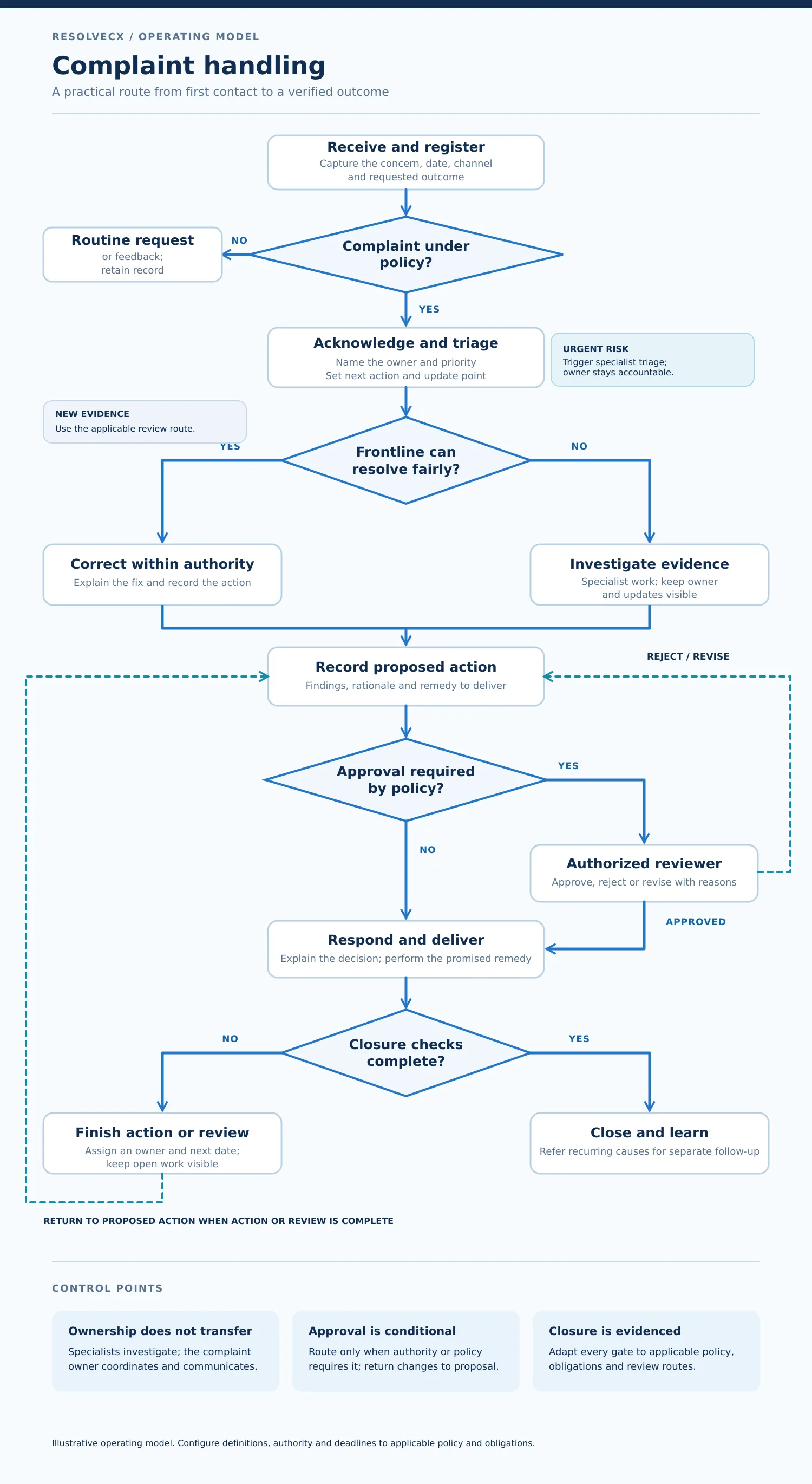
Figure 1. Read each decision and its labeled route before moving to the next action.
Text equivalent: Receive and register. If this is not a complaint under policy, route the request or feedback and retain the proper record. If yes, acknowledge and triage, including urgent specialist review where needed. If frontline staff can resolve fairly within authority, correct and explain; otherwise investigate evidence. Both routes converge on the proposed action and rationale. If approval is required under policy, an authorized reviewer approves or returns the proposal for revision; otherwise proceed within authority. Respond and deliver. If closure checks are complete, close and refer learning. If no, finish the owned action or review and return to the proposed action. New evidence uses the applicable review route; the complaint owner coordinates throughout.
The diagram separates the main path from four decisions: whether the concern qualifies as a complaint, whether frontline staff can resolve it, whether a decision needs approval, and whether closure checks are complete. An urgent risk can trigger specialist review at triage. A customer objection or new evidence can return the record for reconsideration. Adapt this model to your policies and obligations.
How should you read the diagram?
Rectangles describe actions. Diamonds ask questions that determine the next route. The owner remains visible even when a specialist investigates. The final learning loop can continue after an individual complaint closes. Corrective work need not keep a completed complaint open. On a narrow screen, use the enlarged flowchart below to inspect labels at full size; the text equivalent retains every route.
What are the stages of the complaint handling process?
Five practical phases make the complaints handling process flow easier to explain: intake, triage, investigation or early resolution, decision and response, then closure and learning. These phases are a teaching model, not a regulatory prescription. The NSW Ombudsman guidance provides context for accessible complaint handling and organizational learning, not a rule binding every sector. 2
Phase
Decision
Accountable role
Evidence and exit condition
Intake
Is this dissatisfaction requiring a response?
Receiving agent
Original concern, date, channel and acknowledgment
Triage
How urgent is it, and who takes ownership?
Complaint owner
Priority, applicable clock, next action and accepted handoff
Work
Can it be corrected now, or must it be investigated?
Owner and investigator
Facts checked, chronology and source records
Outcome
Is the remedy authorized and clearly explained?
Decision maker and owner
Rationale, any required approval, response and promised action
Closure
Has the action been verified, or is review needed?
Complaint owner
Completion check, objection route and learning referral
Phase 1: Receive and acknowledge
The complaint intake process begins when a customer expresses dissatisfaction through an accepted channel. Capture the customer's account in their words, the service affected, dates, previous contacts and desired outcome. Apply the organization's definition even if the customer never says “complaint.” Acknowledge with a reference, owner and next update.
Phase 2: Triage and assign
The complaint triage process checks potential harm, urgency, repetition, vulnerability or accessibility needs, and any applicable response obligation. Assign a named complaint handler who can coordinate the work. A person must confirm sensitive classifications and accept the handoff. An internal SLA cannot override applicable rules.
Phase 3: Resolve early or investigate
A simple complaint handling process may end with an appropriate frontline correction when the issue is clear and the agent has authority. Record and explain the fix. Investigate conflicting facts, cross-team work or remedies beyond authority. Preserve evidence and updates across handoffs.
Phase 4: Decide and respond
The complaint investigation process produces findings, but findings do not approve themselves. An authorized person assesses findings, redress and reasons. The owner communicates what was considered, what was decided, why, what will happen next and how the customer can seek review where applicable. A response does not prove completion. Approval by a separate reviewer is needed only when the relevant authority policy requires it.
Phase 5: Close, review and learn
The complaint closure process verifies action and records outstanding issues separately. Record the response, decision, any required approval and completion check. An assigned outstanding action is not a completed remedy. If the customer supplies material new evidence, follow the applicable reopening or review route. Refer repeat causes to an improvement owner after closure.
What happens at each step from intake to closure?
These seven detailed steps turn the five phases into actions. They group related tasks at a different teaching level, not a different legal count. For deeper implementation guidance on owners, clocks and records, use the companion complaint handling procedure guide.
1. Receive and register the concern
Record what happened, when and the requested outcome. Link prior contacts about the same issue. Distinguish a complaint from a routine inquiry or service request, but reconsider that classification if a repeated request reveals failure or dissatisfaction. A customer feedback and complaint handling process should not bury dissatisfaction under feedback.
2. Acknowledge and set an update point
Confirm receipt, owner and next step. Check the customer's preferred accessible channel. State a realistic update point under the applicable rules and policy. An acknowledgment is not a decision. An immediate outcome may be combined with acknowledgment where permitted.
3. Assess the route and accept ownership
Document severity, specialist triggers, remedy authority and any deadlines. The next owner must accept an action and review date. Each escalation also needs a recorded acceptance time. Keep related specialist work connected to the complaint. The named complaint owner remains accountable for coordination and the customer response while specialists own their assigned work.
4. Investigate proportionately
Check the source record for simple errors. For disputed issues, gather transactions, messages and relevant accounts. Separate facts, customer statements and assumptions. Test alternatives. Match the investigation to impact and applicable requirements.
5. Decide, approve and perform the remedy
The complaint resolution process records findings and reasons. Check whether a refund, correction, apology, explanation or other action addresses the harm. Obtain approval if the amount, risk or subject falls outside the handler's authority. Assign delivery; approval alone does not complete a remedy.
6. Explain the outcome
Give a plain-language response that addresses each material point. State the decision, supporting reasons, remedy and expected completion. Explain a review or external referral route when applicable. Tailor templates to the customer's facts. In a complaint handling and service recovery process, the practical repair and the explanation both matter.
7. Verify, close or review again
Check the promised action and final communication. Preserve disagreements and route new evidence to a named reviewer. Closed status does not mean customer agreement.
Where should the process branch?
Branches distinguish correction from investigation, routine work from escalation, and handler authority from approval. Every route needs ownership.
On a small screen, scroll this labeled region in both directions to read the diagram, or open the full-size image. A text description follows.
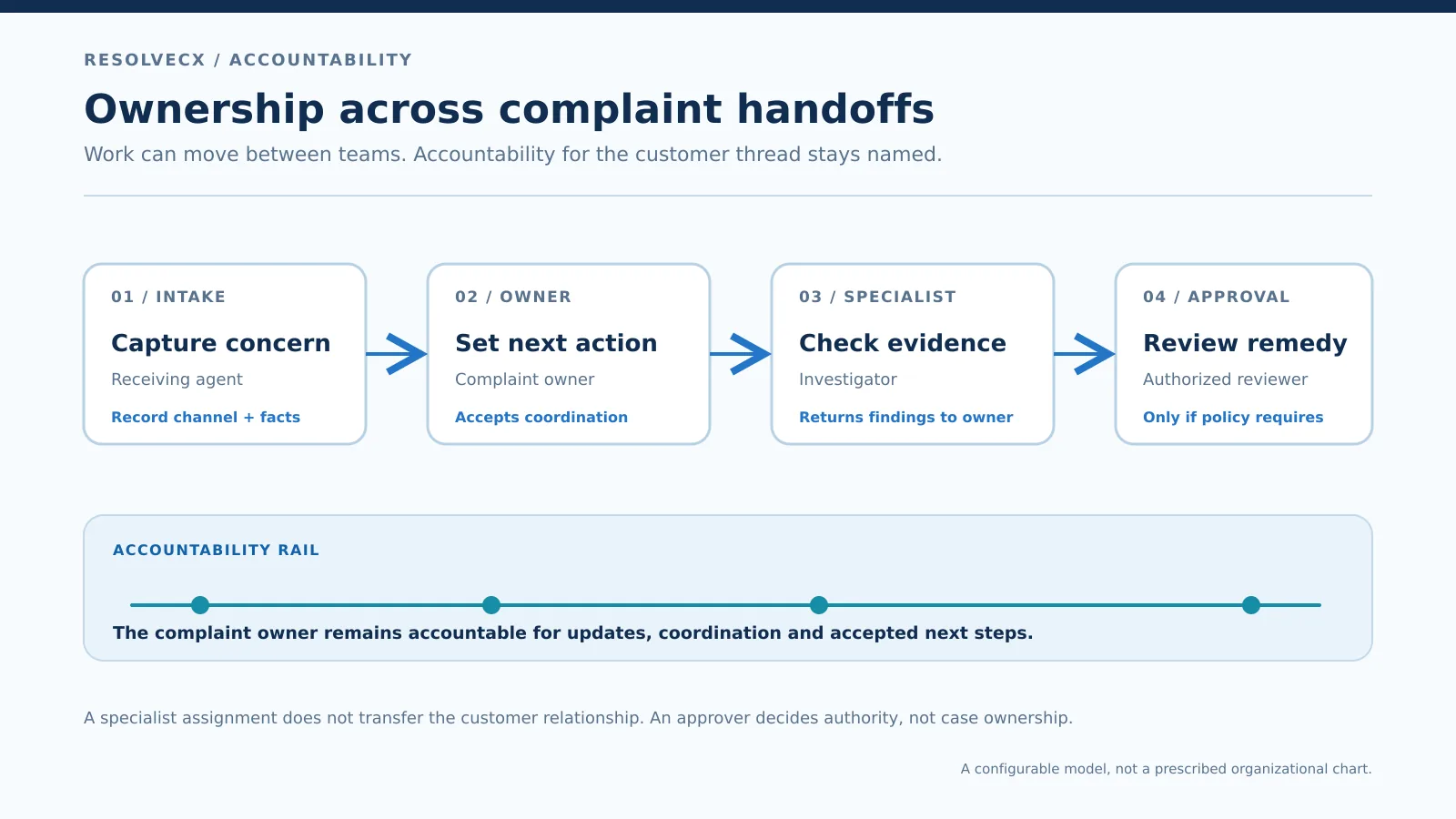
Figure 2. Specialist tasks and conditional approval do not remove the complaint owner's accountability.
Text equivalent: The receiving agent captures the concern and transfers context. The complaint owner sets the next action and customer update. Specialists check evidence and return findings, not silently take over the whole complaint. An authorized reviewer considers the remedy only when the authority policy requires that review. Each handoff needs acceptance, an action, a due date and a visible customer-update owner.
Trigger
Receiving role
Handoff record
Customer update
Simple correction within authority
Frontline complaint handler
Action, reason and completion
Explain the fix and next step
Conflicting facts or cross-team work
Complaint owner and specialist
Accepted assignment, evidence request and due action
Give an investigation update date
Harm, sensitive issue or deadline risk
Appropriate specialist or compliance officer
Trigger, time, receiving owner and review point
Explain the route without prejudging findings
Remedy beyond authority
Authorised approver
Proposed action, rationale and approval decision
Communicate the approved outcome
New evidence or challenged decision
Independent reviewer where applicable
Objection, original decision and new material
Explain review scope and timing
When does a complaint become a case or escalation?
A case connects multi-team work and evidence. Escalation moves an issue to a person with the authority or expertise required to act. Neither should erase the original customer concern. The complaint handling and escalation process keeps customer communication visible. See how ResolveCX structures complaint records and decisions.
What if the customer rejects the outcome?
Record the objection and ask whether it adds material facts or challenges the handling or decision. Follow the applicable internal review, reconsideration or external route. A reasoned decision can be administratively closed even when the customer disagrees, but an open review request cannot be hidden by that status. Whether a particular complaint must remain open depends on the applicable procedure. Explore ResolveCX escalation management.
What must be documented before closure?
A useful complaint handling process map puts evidence beside each decision. The minimum record includes the original concern, key dates, classification, owner, due actions, sources checked, findings, decision rationale, remedy, any required approval, customer response and any review request. Restrict sensitive material appropriately. An activity log cannot prove evidence sufficiency.
On a small screen, scroll this labeled region in both directions to read the diagram, or open the full-size image. A text description follows.
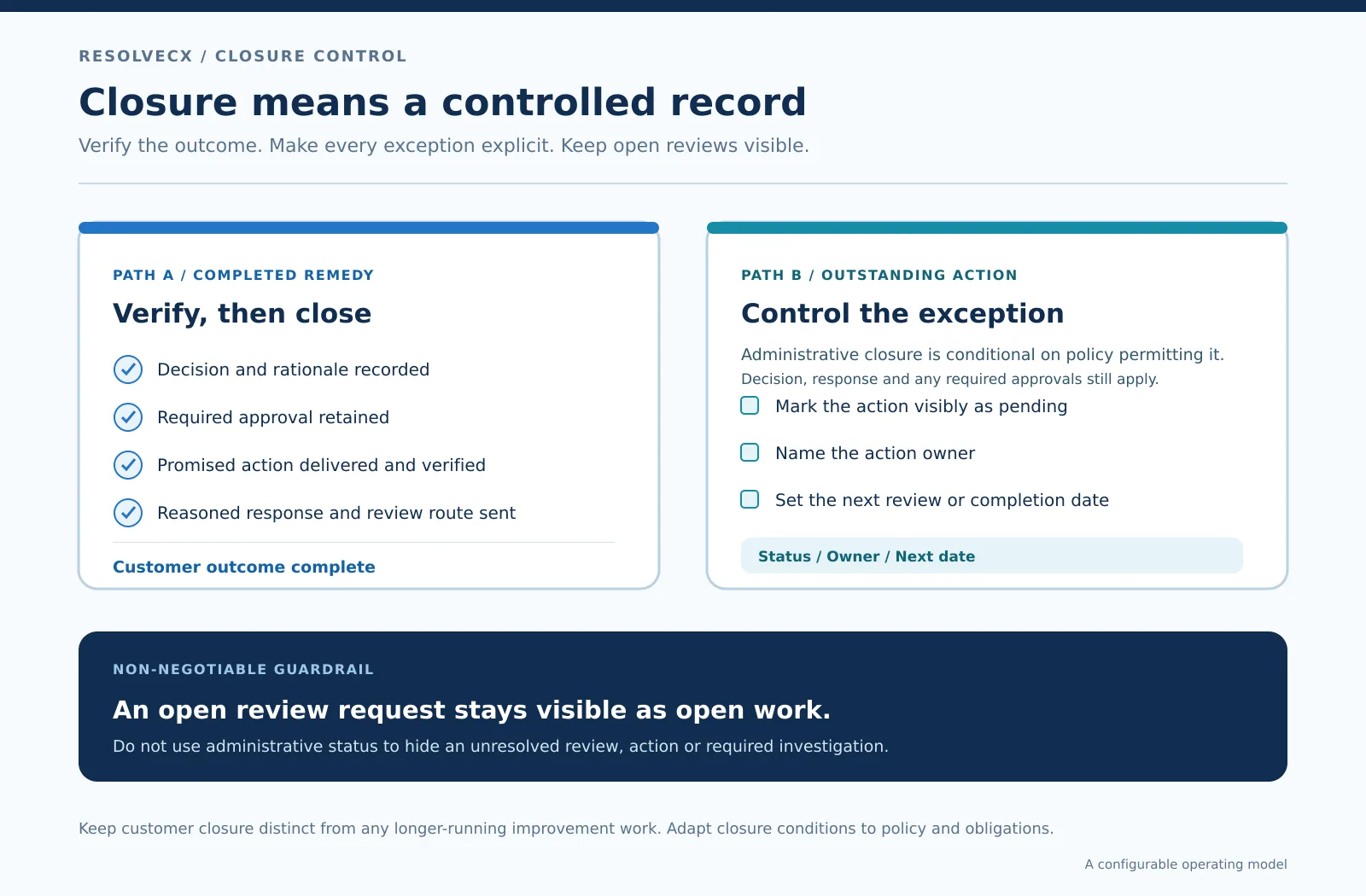
Figure 3. Verify completion; do not rename a pending action as a completed remedy.
Text equivalent: Before closure, retain the decision and rationale, any policy-required approval, remedy-completion evidence and the customer response with applicable review information. If any required check fails, assign an owner and date and return to action or review. Administrative closure with unfinished work is allowed only if the applicable procedure permits it. Keep pending work and review status visible; other procedures require the complaint to stay open.
Before closing, the owner should confirm the promised remedy has been delivered and checked; the customer has received a reasoned response; any approval required by the authority policy is retained; applicable review information is included; and any recurring cause has been referred for follow-up. An outstanding action must have an explicit owner, due date and visible pending status, not be described as a completed remedy. If the applicable procedure permits administrative closure before all actions finish, record that exception and keep the action and any review request visible and tracked. Other procedures require the complaint to remain open. The closure gate belongs before the close symbol, not after it.
Complaint handling process example: repeated billing errors
Consider a fictional customer who reports three incorrect charges after changing a subscription. The intake agent records each date, amount and previous contact. The owner checks whether the issue is a duplicate report and asks billing to compare invoices with the account-change history. The investigator identifies a mismatch, but the total correction exceeds the handler's approval limit. An authorized reviewer checks the evidence and proposed remedy. The owner explains the decision, confirms the correction and offers an appropriate review route. Similar reports prompt a separate cause investigation.
Moment
Owner
Connected record
Next decision
Intake
Receiving agent
Customer account and earlier contacts
Complaint or routine inquiry?
Investigation
Complaint owner and billing specialist
Invoices and change chronology
What caused the charges?
Approval
Authorised reviewer
Findings and proposed correction
Is the remedy justified?
Response
Complaint owner
Decision, action and customer message
Can closure checks pass?
Prevention
Improvement owner
Related reports and effectiveness check
Has the recurring cause been fixed?
This complaints handling process example makes no customer or performance claim. Other sectors may need different evidence and review routes.
How does closure connect to service recovery and prevention?
Service recovery addresses the individual customer's loss or inconvenience. Root cause analysis asks why the failure occurred and whether others are affected. These jobs can have different owners. A complaint may close after the response and action are complete while a product, billing or policy change remains in progress. The improvement owner should verify whether the corrective action worked rather than assuming that a falling complaint count proves success.
On a small screen, scroll this labeled region in both directions to read the diagram, or open the full-size image. A text description follows.
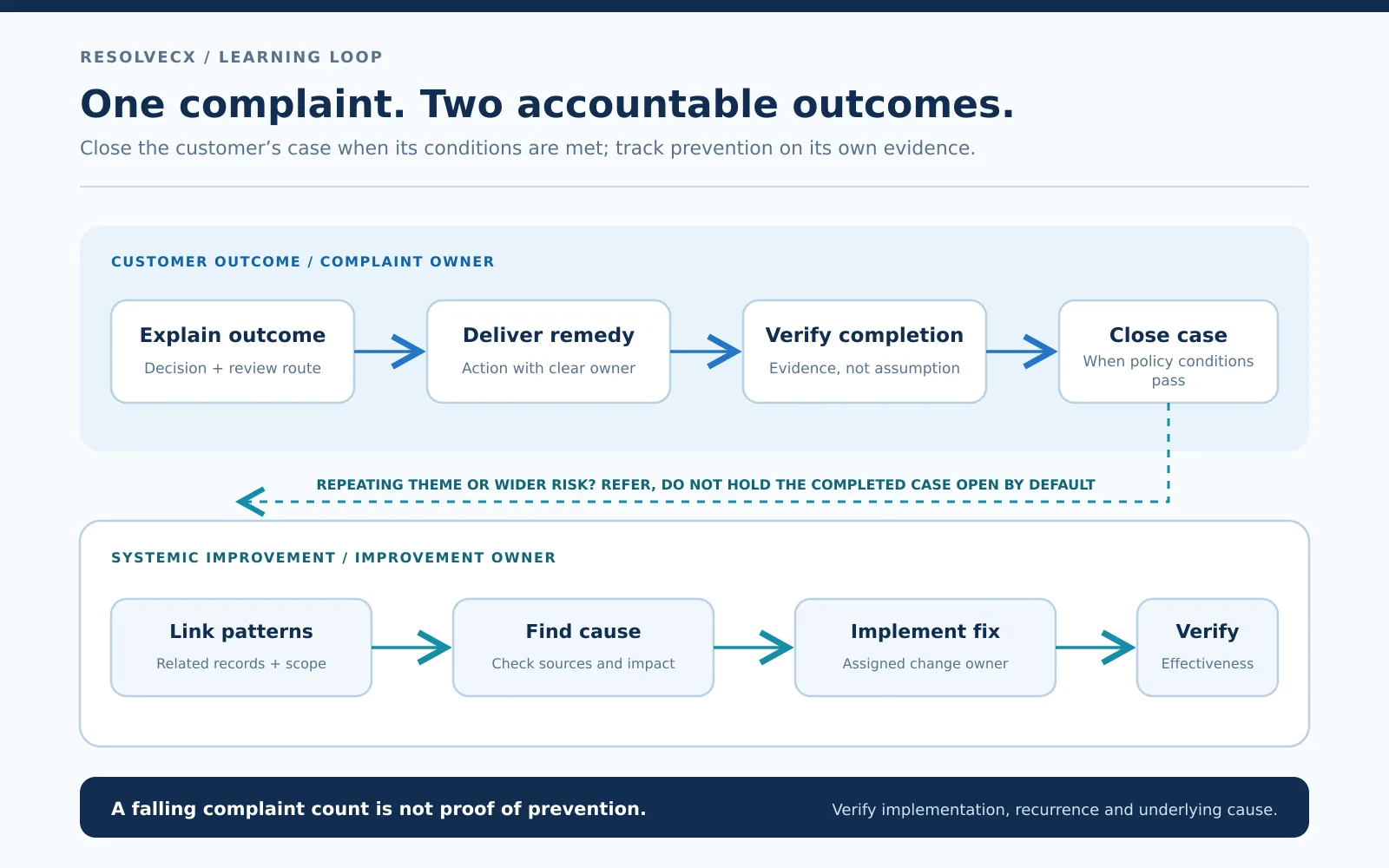
Figure 4. Customer closure and systemic improvement have distinct owners and evidence.
Text equivalent: The complaint owner verifies the individual response and remedy. An improvement owner links related reports, examines the underlying cause, assigns corrective work and verifies implementation and recurrence. Systemic work may continue after customer closure. If the fix fails, reopen the cause review. A declining complaint count alone is not evidence of prevention.
This distinction matters in complaint handling processes at scale. The complaint owner can report a completed customer outcome; the improvement owner tracks the wider fix, evidence of implementation and recurrence. If the fix fails, reopen the cause review.
Review speed, decision quality, fairness and recurrence. Track overdue open complaints, completed remedies, decisions changed on review and recurring themes, then sample records to test the reasons behind those numbers. Define each denominator before comparing teams or periods. A higher complaint volume may reflect easier access or more consistent registration rather than worsening service. A lower volume cannot prove prevention unless the underlying cause and the corrective action have been checked.
How do regulated teams adapt the flowchart?
There is no worldwide complaint deadline. The organization must map its jurisdiction, sector, product, customer and complaint type before configuring response clocks, records or external review language. ISO 10002:2018 provides guidelines for designing and improving complaint handling, not a single legal timetable. 1
For UK financial services firms and complaints within scope, FCA DISP sets rules for competent, diligent and impartial investigation, fair assessment, explanation and appropriate redress. 3 Under DISP 1.5, complaints resolved by close of business on the third business day following the day of receipt follow a distinct route, including a summary resolution communication. Resolution for this purpose requires the complainant's indicated acceptance; it is not simply an internal closed status. 4
For many other in-scope complaints, DISP 1.6 requires a final response by the end of eight weeks after receipt, or a qualifying written response explaining the delay, expected final-response timing and applicable Financial Ombudsman Service information. This is not permission to ignore interim updates or complaint-specific exceptions. For EMD and PSD complaints within the relevant provisions, a final response is due by the end of 15 business days after the day of receipt. In exceptional circumstances beyond the respondent's control, a holding response by that point must explain the delay and specify the final-response deadline, with the final response due by the end of 35 business days after the day of receipt. Mixed complaints, early resolution and other exceptions need their applicable rule checked. 5
Final-response wording and Financial Ombudsman Service rights must be assessed against the actual complaint and DISP provisions. FOS explains the usual six-month referral period after a valid final response, with exceptions including exceptional circumstances, no valid final response or business consent to waive that limit. Its business guidance is not a worldwide service deadline. 7 These UK rules do not govern every customer service operation.
Consumer Duty adds an outcomes-monitoring context for firms to which it applies. Complaints data can help identify harm and recurring causes, but a dashboard alone does not establish good outcomes. Legal and compliance stakeholders should confirm the current rules and exceptional cases before implementation. The generic complaint handling process diagram should therefore use a configurable deadline, not a hard-coded eight-week timer. 6
How can software and AI support human decisions?
Software can connect intake, assignments, evidence, approvals, customer responses and audit history. AI may suggest a category or route using available context. People should review uncertain or sensitive suggestions, investigate facts, approve consequential remedies within their authority and own the final communication. These are operating-model considerations, not verification of particular ResolveCX controls. Confirm required routing, permissions, review gates and manual fallbacks with the team before relying on them. For simple workloads, a documented process can suffice if ownership and records remain reliable.
How should a team test its process flow?
Use a real, anonymized complaint to test the customer complaint handling process flow, not just a neat diagram. A customer complaint handling procedure should pass these tests:
Can staff recognize dissatisfaction across phone, email and web channels?
Does every handoff identify a receiving owner and due action?
Can a simple issue close without skipping the necessary record?
Does a complex case retain the original concern and evidence?
Does an approval gate stop an unauthorized remedy?
Are the customer response and delivered action both verified?
Can a rejected decision or new evidence enter the right review route?
Who tracks a recurring cause after individual closure?
Revise the complaint handling process template when the test finds an unowned step. A complaint management workflow is useful only if the team can follow it under real workload and explain the outcome later.
Conclusion
The best flowchart is one staff can use when the next action is uncertain. Put the owner, decision question, evidence and exit condition at every important handoff. Test both the fast route and a disputed, cross-team complaint before relying on the design. Discuss your complaint workflow with ResolveCX.
Frequently Asked Questions
It is a visual route from receipt to closure, with decisions for classification, investigation, escalation, approval and review. A useful chart names the owner and required record at each branch.
Receive, acknowledge, assess, assign, investigate or correct, decide, respond and verify closure. The depth of investigation depends on the issue and applicable obligations.
Yes, when the facts are clear and the agent has authority. Record the issue, action and customer response, and follow any applicable formal communication rule.
Escalate for possible harm, specialist assessment, authority limits, deadline risk or wider failure. Record the receiving owner and next customer update.
A named complaint owner coordinates progress and communication. Specialists can investigate parts of the issue; approval may sit with someone else.
Keep the customer's account, chronology, relevant source records, findings and rationale. Obtain approval when the decision exceeds the handler's authority.
Close when the decision and response are recorded, the remedy is verified and any applicable review route has been explained, subject to the organization's procedure. An outstanding action needs a visible pending status, owner and due date and is not a completed remedy. Only use administrative closure with unfinished work if the applicable procedure allows it, without concealing a pending review. Policy may require the complaint to stay open.
Record the objection, assess new evidence and explain the available review route. Disagreement does not automatically invalidate the decision or erase the original record.
No. A straightforward correction may be resolved quickly with an appropriate record. Complex, disputed or high-risk matters need proportionate investigation.
No. It concerns particular UK financial complaints under DISP, and exceptions include certain payment-services and electronic-money complaints. Other sectors and jurisdictions set different requirements.
ResolveCX Team are practitioners and product specialists in complaint governance, escalation management, and regulated CX operations. Our articles draw on real implementation experience across financial services, healthcare, and telecommunications.