
How AI Complaint Resolution Software Prevents Escalations and Customer Churn
Learn how AI-powered resolution governance helps teams detect escalation risk, preserve case context, connect recurring complaints to root causes, and intervene before customers leave.
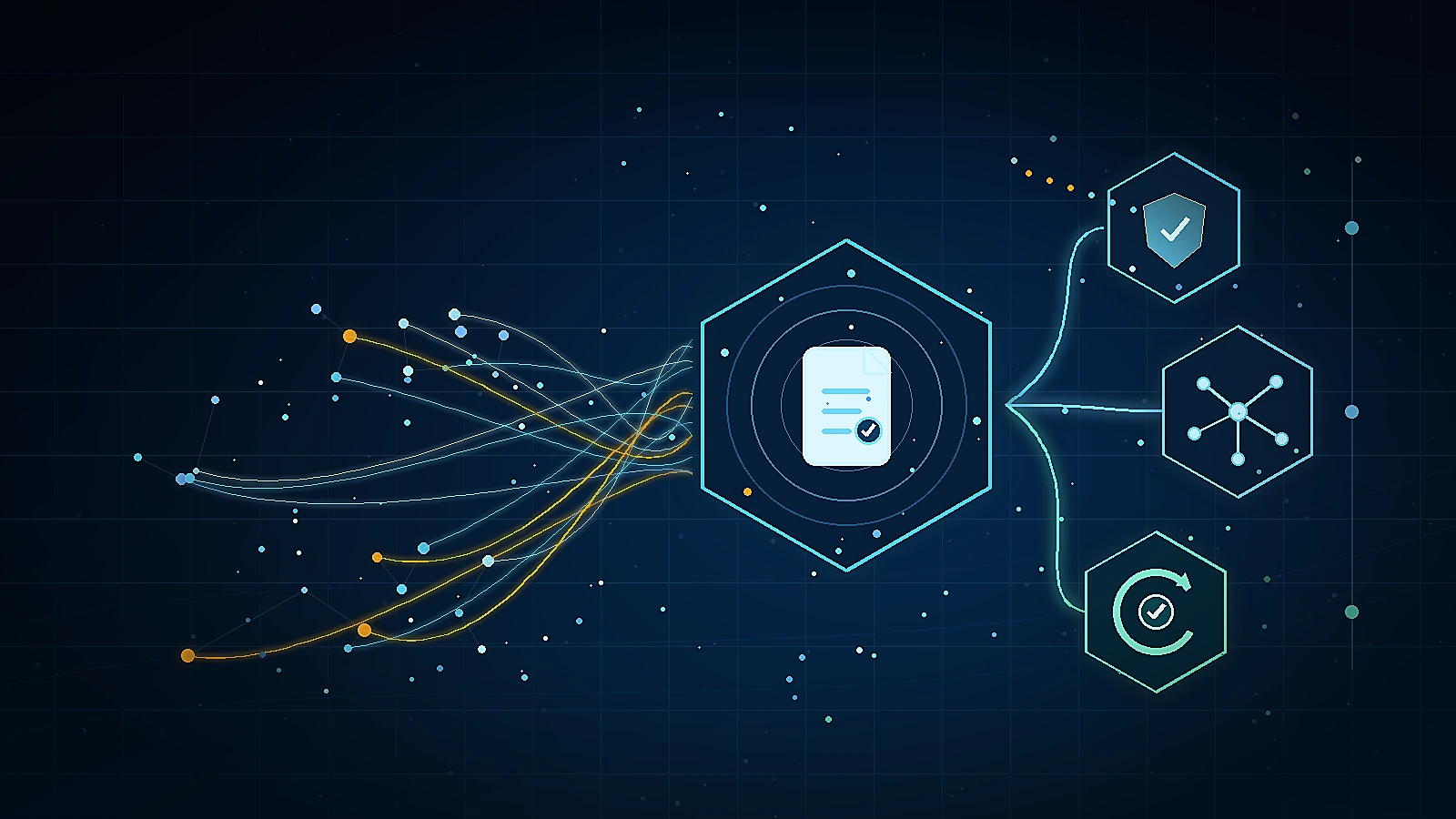
Key Takeaways
- 1Escalations happen because ownership is unclear, not because tickets are missing.
- 2AI can detect warning signals before a customer reaches a regulator or decides to leave.
- 3Governing resolution means connecting complaint intake, case management, escalation, root cause, and churn prevention.
- 4Problem resolution software turns repeated complaint data into operational intelligence.
- 5Every AI recommendation should be explainable, reviewable, and recorded.
A customer complaint rarely becomes a serious escalation because an organisation forgot to create a ticket. It escalates because ownership is unclear, context is scattered, promises are missed, or several teams work on the same issue without one accountable path to resolution.
Traditional service tools capture activity. Modern AI complaint resolution software should help teams understand what is happening, decide what happens next, and preserve the outcome. When complaints, cases, escalations, root causes, and churn risks work as one governed process, organisations can resolve faster and protect customer trust.
Why customer complaints become escalations
Most escalations begin as manageable problems. Risk grows when a customer has to repeat the story, receives inconsistent answers, or waits without knowing who owns the outcome.
The warning signs are often visible early: repeated contact, worsening sentiment, missed service levels, multiple reassignments, reopened complaints, and similar failures across products or locations.
Customer complaint escalation software should recognise these signals and initiate the right response. That may involve increasing priority, assigning a specialist, alerting a manager, or starting a controlled workflow with clear actions and deadlines.
An escalation is not simply a new status. It is a risk event that needs a documented handoff, named ownership, and a clear reason for every decision.
Why call center case management needs a case-first model
The contact centre is often where risk first becomes visible. An adviser may hear frustration, find previous contacts, or identify a failure that needs help from billing, operations, compliance, or engineering. Call center case management turns that conversation into a structured resolution record.
A strong case contains the concern, communications, actions, evidence, owner, deadlines, approvals, and expected outcome. It follows the issue across departments after the call ends.
AI can summarise the interaction, classify the complaint, detect sentiment, recommend priority, and route the case. The next owner receives the context needed to act without asking the customer to start again. This is the difference between routing a ticket and governing a resolution.
How AI escalation management identifies risk earlier
A single message rarely tells the whole story. A polite customer may be making a fifth contact, while a high-value account may have unresolved issues across several channels.
AI escalation management can evaluate signals together, including complaint frequency, sentiment trend, customer segment, previous outcomes, reopened cases, missed commitments, and product or service failure patterns.
The platform can recommend an action or trigger a governed workflow. High-risk cases can be prioritised before the customer reaches a regulator, posts publicly, or decides to leave.
Human oversight remains essential. AI recommendations should be explainable, reviewable, and recorded. Teams should know why a case was marked urgent, why it was routed to a particular group, and who approved the final response. AI should support judgement, not hide it.
Complaint resolution must connect to problem resolution
Complaint resolution software is most valuable when it improves both the individual outcome and the wider operation.
If many customers report the same billing error, delivery failure, or product defect, closing each complaint separately does not prevent recurrence. Those cases should connect to a shared operational problem.
Problem resolution software helps teams group related cases, investigate root causes, document known errors, assign corrective actions, and verify whether the fix worked.
The governed lifecycle becomes:
Complaint intake | Case investigation | Escalation control | Root cause analysis | Corrective action | Prevention
Connected stages turn complaint data into operational intelligence. Leaders can see which processes create dissatisfaction, which fixes reduce recurrence, and where risk is accumulating.
Customer churn software should trigger action, not just scores
Many customer churn software products identify declining engagement or purchasing changes. Complaint data adds another layer by showing where trust is being damaged in real time.
Repeated contacts, unresolved complaints, negative sentiment, missed promises, and weak outcomes can indicate that a relationship is at risk.
A useful platform does more than display a score. At a defined threshold, it can create a retention case, notify an owner, start an escalation, assign a recovery action, or monitor the outcome. This connects prediction with intervention while the relationship is still recoverable.
What to look for in the best software for managing customer escalations
The best software for managing customer escalations should support the complete journey from intake to prevention. Buyers should look for:
- Omnichannel intake with one customer and case history.
- AI classification, summarisation, sentiment detection, and risk signals.
- Named ownership with service level monitoring.
- Controlled handoffs, approvals, and escalation paths.
- Evidence capture and a complete audit trail.
- Churn indicators linked to practical workflows.
- Root cause and problem management for recurring failures.
- Integration with CRM, contact centre, and operational systems.
Zendesk is a capable general customer service platform with mature ticketing and omnichannel support. ResolveCX addresses a more specialised operating need: governed complaint, case, escalation, incident, and problem resolution.
ResolveCX creates a connected resolution record with named ownership, controlled handoffs, evidence, service level accountability, and root cause linkage. A ResolveCX and Zendesk comparison can help buyers decide which model fits their governance requirements.
How ResolveCX turns customer risk into governed action
ResolveCX brings five governance modules together in one operating layer: Complaint Management, Case Management, Escalation Management, Incident Management, and Problem Management.
Its AI engine supports sentiment routing, complaint classification, customer segmentation, omnichannel histories, case summarisation, and churn prediction. These capabilities help teams preserve context, prioritise risk, coordinate action, and learn from recurring failures.
ResolveCX offers an industry-leading approach to resolution governance. Success is measured by whether the right issue was resolved, the outcome can be defended, and the failure was prevented from returning.
Frequently asked questions
What is complaint resolution software?
Complaint resolution software helps organisations capture, investigate, assign, escalate, and resolve complaints through a structured process with clear ownership, service levels, evidence, and documented outcomes.
What does AI compliant resolution mean?
The phrase AI compliant resolution generally refers to AI-supported resolution that remains controlled, explainable, auditable, and subject to appropriate human oversight. It is not a universal certification or legal standard, so organisations should assess the rules that apply to their industry and jurisdiction.
Can AI complaint resolution software reduce churn?
Yes. It can identify warning signals within complaint activity and trigger retention, service recovery, or management intervention while the customer relationship may still be recoverable.
Start resolving, not tracking
Every complaint contains operational information and an opportunity to rebuild trust. ResolveCX turns that information into governed action, from intake and case ownership to escalation control, root cause prevention, and churn intervention.
Book a ResolveCX demo to see how your team can resolve faster, escalate less, and protect more customer relationships.
About ResolveCX Team
ResolveCX Team are practitioners and product specialists in complaint governance, escalation management, and regulated CX operations. Our articles draw on real implementation experience across financial services, healthcare, and telecommunications.
Contact the TeamRelated articles

Escalation Management: Clear Paths, Faster Outcomes
Escalation management is a risk and governance problem. Why ticket-based escalations break down and what case-first governance looks like in practice.
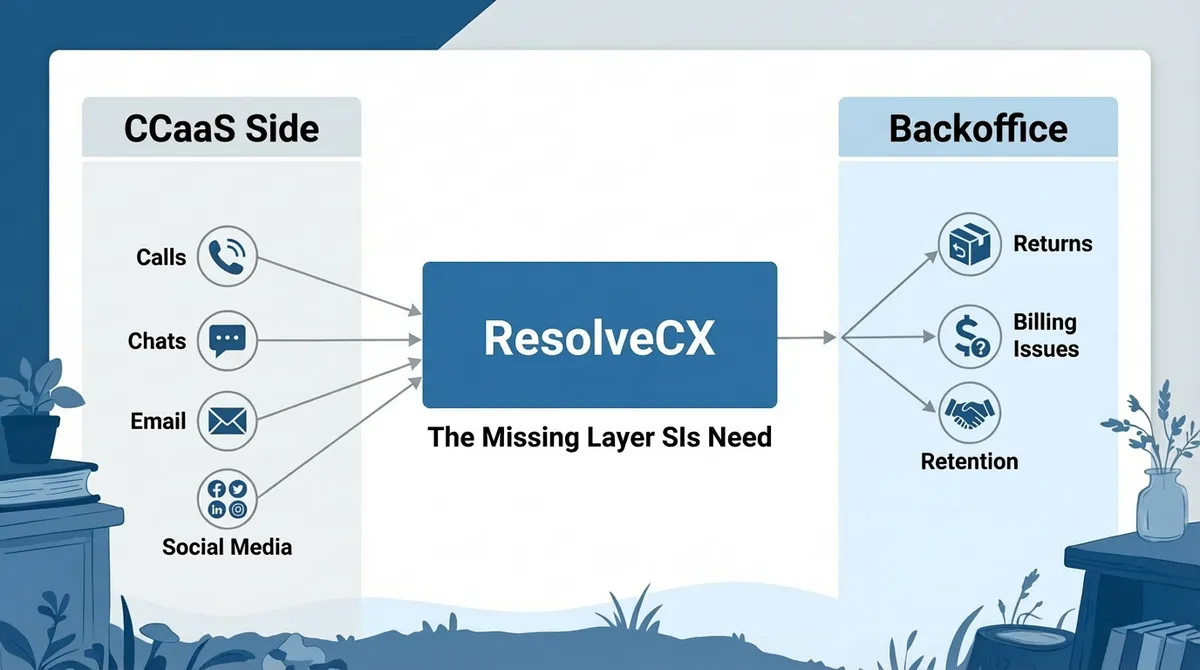
Why System Integrators Need a Case-First Layer
How ResolveCX helps SIs attach higher-margin services by making complaint and escalation handling auditable, consistent, and defensible across every CCaaS deployment.
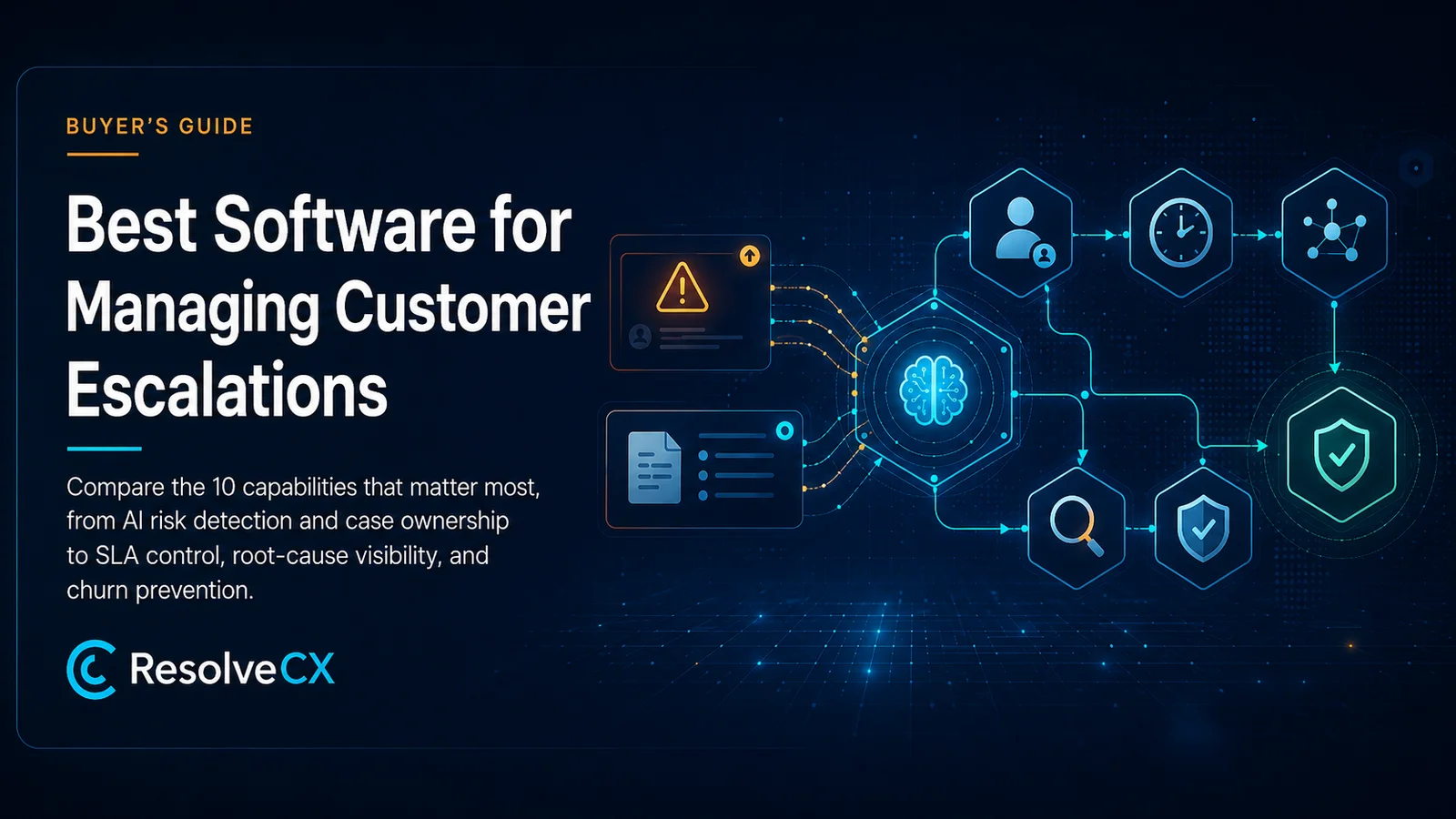
Best Software for Managing Customer Escalations: 10 Capabilities to Compare
A practical buyer guide to the ten capabilities customer escalation software needs, from AI risk detection and named ownership to root cause analysis and churn intervention.