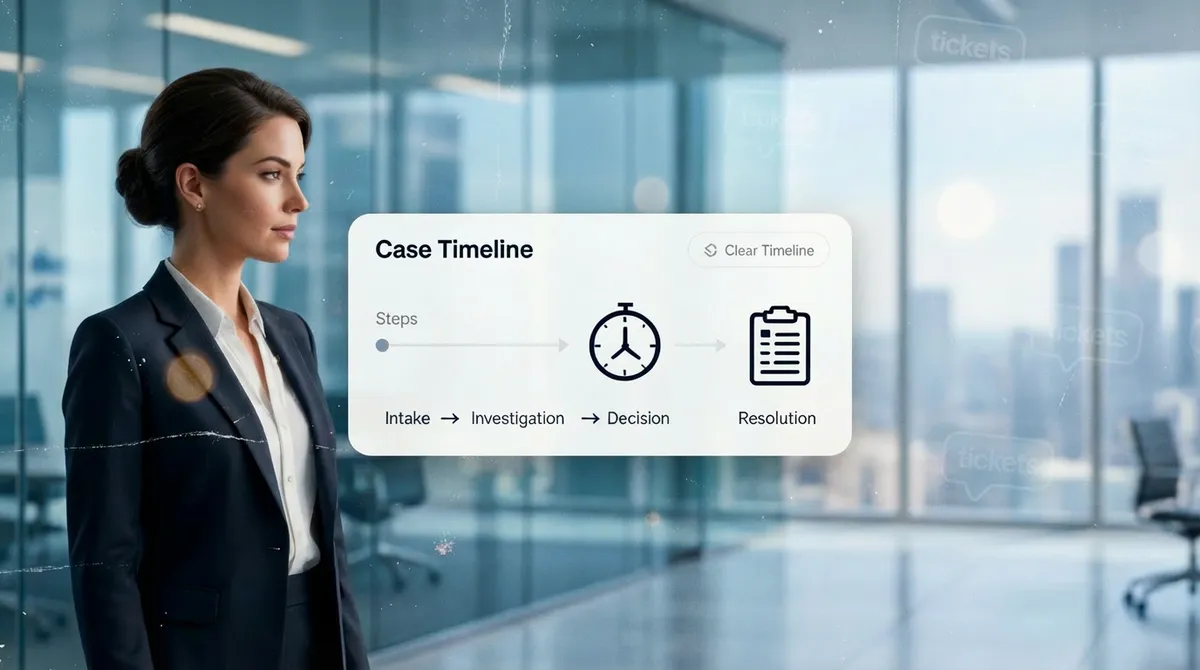
Rising Complaint Numbers: How Complaint Teams Should Prepare
Distinguish sustained rises, short spikes, and backlogs, then plan workload, protect deadlines, and keep complaint decisions and customer updates reliable.
ResolveCX Team23 November 202618 min read
Key Takeaways
1Separate sustained rises, short spikes, and growing backlogs before changing resources.
2Compare exposure-adjusted rates using consistent complaint, case, and contact counting rules.
3Forecast volume and effort with stated organization-specific assumptions, ranges, and owners.
4Route by harm, deadline, and decision authority while preserving individual customer circumstances.
5Monitor demand, delivery, and quality, then verify whether corrective action reduced recurrence.
Rising complaint numbers mean more than a busy inbox. For complaint teams in regulated firms, they can increase the risk of missed deadlines, inconsistent decisions and customers left without updates. Preparation starts with a reliable measure of demand, then matches capacity and priority rules to the work coming in. Explore ResolveCX complaint governance to see how a case-first approach keeps ownership and evidence visible as volumes change.
Rising complaint numbers do not automatically mean service has deteriorated. A new channel, better identification of complaints, a larger customer base or one operational failure can change the count. Leaders need to establish what changed before they redeploy staff or redesign a process. The practical sequence is measure, forecast, resource, triage, resolve, report and learn.
What do rising complaint numbers mean for a complaint team?
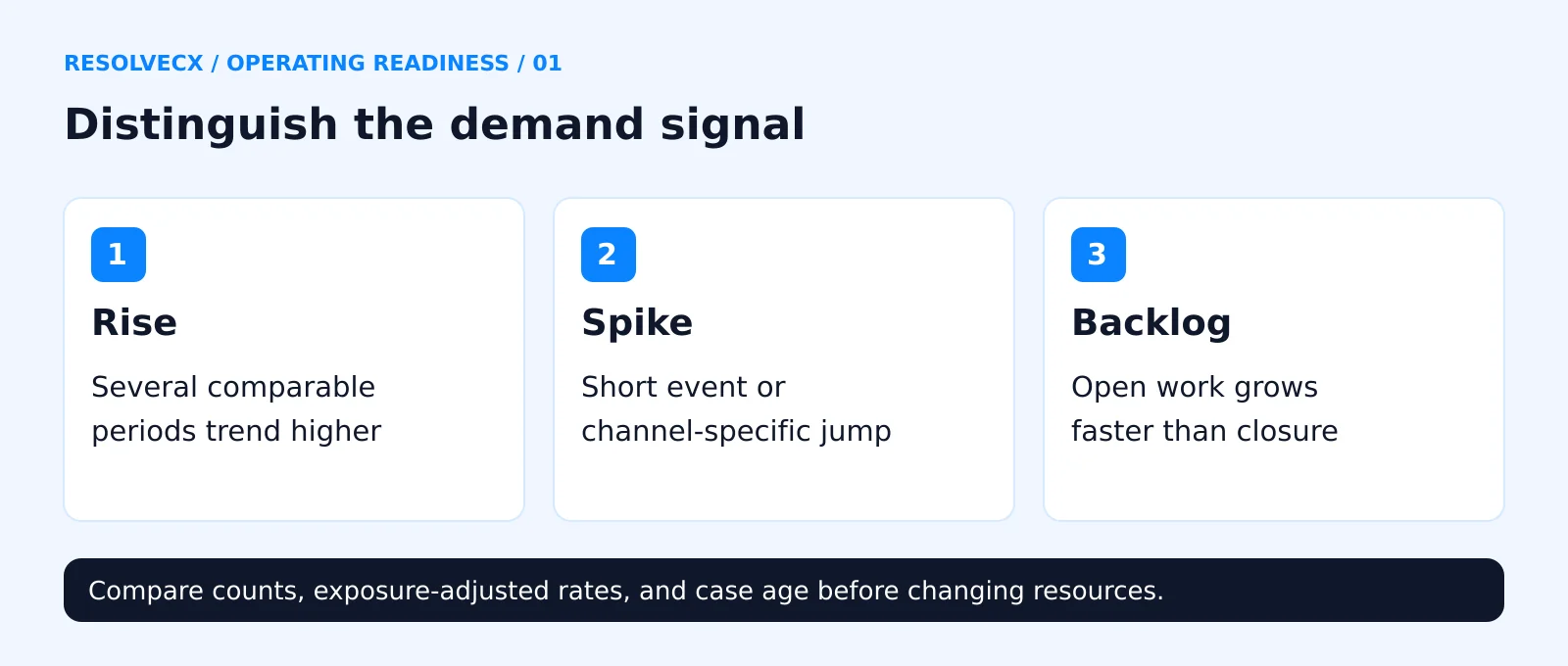
Figure 1. Distinguish the demand signal.
Figure 1 text equivalent: Rise means several comparable periods trend higher. Spike means a short event or channel-specific jump. Backlog means open work grows faster than closure. Compare counts, exposure-adjusted rates, and case age before changing resources.
Rising complaint numbers are a sustained increase in complaints received over comparable periods, after accounting for changes in business volume and intake. The complaint volume KPI is a count over a defined period. It should be accompanied by a rate, such as complaints per thousand active accounts, and an explanation of how repeat contacts are counted. A single bad week deserves investigation but is not, on its own, a lasting trend.
Situation
What the data shows
Immediate response
Sustained rise
Several comparable periods show higher intake or a higher exposure-adjusted rate
Investigate drivers and adjust the capacity plan
Short spike
A sharp, time-limited jump tied to an event or channel
Check harm and activate temporary triage
Growing backlog
Unresolved work rises because completion falls behind intake
Protect deadlines and assign recovery ownership
Keep these distinctions separate. A queue can grow while incoming complaints fall if investigation time increases. Equally, intake can rise without a backlog when resolution capacity keeps pace. Ask what is being counted: complaints, customers, contacts or cases. A customer calling three times about one open complaint may generate three contacts but should not silently become three new complaints.
Why do complaint numbers rise?
Complaint numbers rise when customer exposure, service failures, reporting behavior or detection practices change. Start by grouping possible causes rather than assuming the contact center caused the increase. Common triggers include product changes, billing errors, delayed delivery, outages, policy changes, price movements and confusing communications. Seasonal demand can intensify any of these.
External data gives useful context but cannot diagnose an individual firm. The UK Financial Conduct Authority reported 1.85 million complaints received by financial services firms between January and June 2026, 6.3% higher than H2 2025, when it reported 1.74 million. These are the FCA's published rounded figures, not an independently recalculated change from rounded totals. The aggregate excludes firms authorized only for consumer credit activities and can change after firms resubmit data. Larger businesses naturally generate more complaints, so compare your own exposure-adjusted rate and mix before interpreting a market change as your cause. 1
The Legal Ombudsman's February 6, 2026 release reported 3,496 new complaints received from October 1 to December 31, 2025, 37% above the equivalent quarter of 2024/25. This is demand for an external ombudsman, not the number of first-tier complaints received by every law firm. Internal and external measures should not be combined into one trend line, and figures from different sectors, periods, and populations are not a common benchmark. 5
How can teams spot a rise before the queue becomes unmanageable?
Spotting a rise early requires consistent intake coding and a short set of leading indicators. Review new complaints by day and week, but compare like with like: identical counting rules, channels, categories, customer populations and working days. Check whether an improved capture process explains part of the change. Then sample original records to determine what customers actually experienced.
Useful early warnings include a rising complaint rate in one product, more repeat contacts, aging cases, missed promised callbacks, growth in complaints about one incident, and a falling proportion resolved at the first appropriate contact. Escalations and reopened cases can reveal poor quality even while closure totals look healthy. A dashboard should show these signals alongside the source records so an analyst can test an apparent pattern.
For example, a sudden increase in delivery complaints could reflect a new sales promotion, a carrier failure or a changed category rule. Separate the cause hypotheses and check fulfillment data before acting. Complaint trend analysis explains how to validate patterns against cases; this article focuses on using that signal to prepare a team.
How do you forecast incoming complaints?
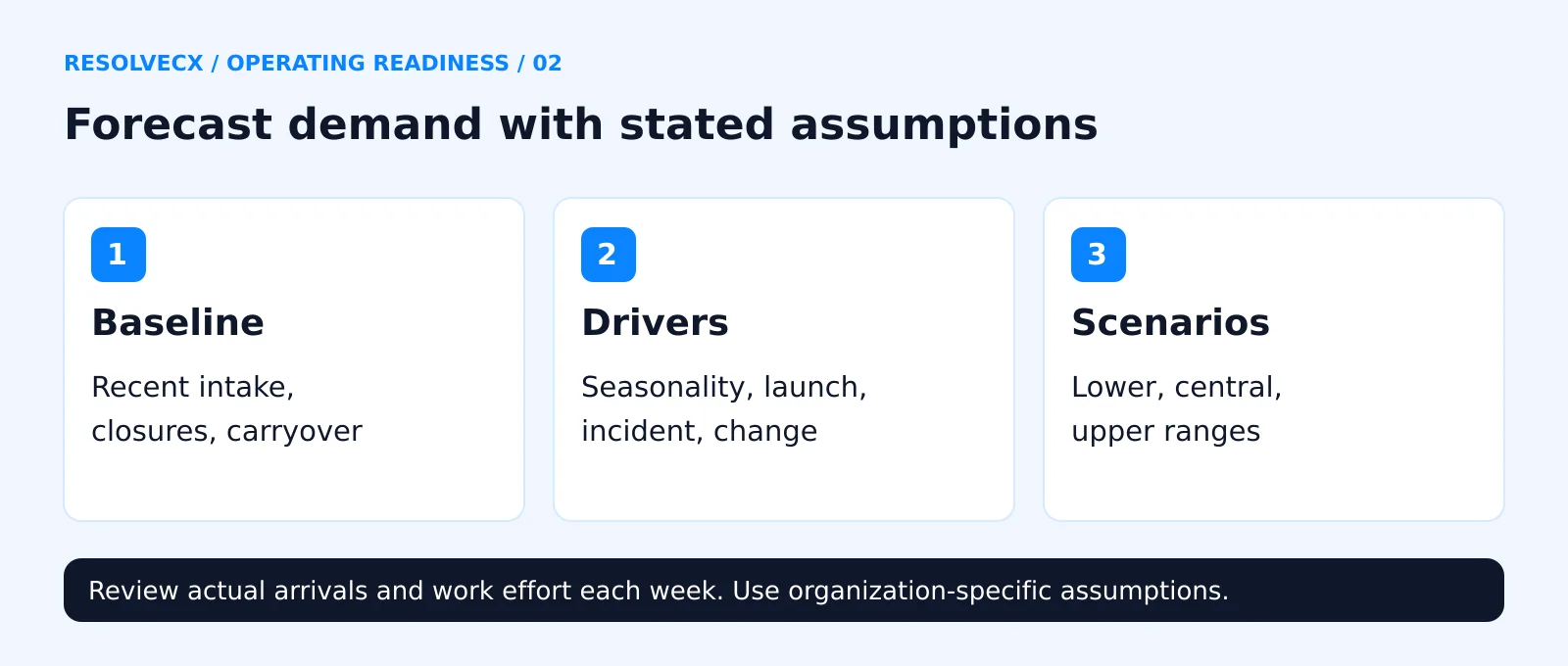
Figure 2. Forecast demand with stated assumptions.
Figure 2 text equivalent: Start with baseline intake, closures, and carryover. Examine seasonality, launches, incidents, and change as drivers. Produce lower, central, and upper scenario ranges with organization-specific assumptions. Review actual arrivals and work effort each week. This conceptual illustration is not an AI forecast or staffing formula.
Forecast complaint intake by starting with historical volumes for comparable periods and then adjusting for known changes. Do not turn a rough projection into a promise. Label the assumptions, range, and owner. A useful forecast identifies which complaint types may rise, when, how much work they require, and which conditions would invalidate the estimate. The following five steps describe an organization-specific planning approach, not a guaranteed staffing formula or a ResolveCX AI forecast.
Establish a baseline using recent weekly intake, resolution and carryover by category. Remove duplicate contacts and document category changes.
Examine seasonality and business events: renewals, launches, price changes, service migrations and planned maintenance.
Add near-term operational signals such as incidents, failed transactions, delivery delays and an unexpected rise in customer contacts.
Produce a central estimate and plausible lower and upper scenarios. State assumptions rather than presenting false precision.
Reforecast at a set cadence, comparing actual arrivals, case complexity and closures with expectations.
For an organization-specific scenario example, lower demand might assume an incident fix holds and repeat contacts fall. A central scenario might assume the recent case mix continues through planned renewals. An upper scenario might assume the fix is delayed while an upcoming launch increases arrivals and specialist effort. Record the evidence, planning period, owner, and review trigger for each assumption. These are examples to test against actual work, not predicted results.
The forecast should distinguish volume from effort. Ten straightforward complaints may need less investigation time than two linked cases involving vulnerable customers, several teams and contested evidence. Use recent handling-time ranges for each type, with review by experienced handlers. If no reliable history exists, start with observed work and improve the baseline over successive weeks.
In its February 6, 2026 Q3 release, the Legal Ombudsman forecast more than 14,000 complaints for its 2025/26 financial year. That was its outlook at the time, not a current actual total or a staffing formula for another organization. Use your own intake, service commitments, and complexity mix to plan resources. 5
How should teams prepare capacity for rising complaint numbers?
Capacity planning turns a forecast into named work coverage. Estimate the investigation, review, communication and approval time required, then compare it with actual available hours. Account for leave, training, supervision and quality assurance. Do not equate a person's scheduled hours with uninterrupted complaint-handling time.
Start with a short-term capacity plan. Protect specialist reviewers for complex or high-harm cases; train suitable colleagues to handle routine categories; and define how work moves between teams. Keep the receiving owner, current deadline, evidence and next action together at every handoff. A team that transfers a record without its context simply moves the queue.
Use automation for administrative assistance where it is demonstrably helpful. Classification suggestions, case summaries and reminders may reduce avoidable handling work, but an accountable person must review uncertainty, corrections and customer impact. Review ResolveCX complaint management software for structured ownership, evidence and workflow controls. Its capabilities should be evaluated against the team's process and actual integration requirements.
Set a trigger for capacity changes before the queue is critical. Organization-specific examples include sustained intake above completions, an aging band crossing its agreed tolerance, or a concentration of work requiring scarce approval. These examples are not guaranteed staffing formulas. The precise trigger should reflect the organization's own risk and service commitments. Record who authorizes redeployment, what work is deferred, and when the temporary arrangement will be reviewed.
How should teams triage and prioritize complaints during a rise?
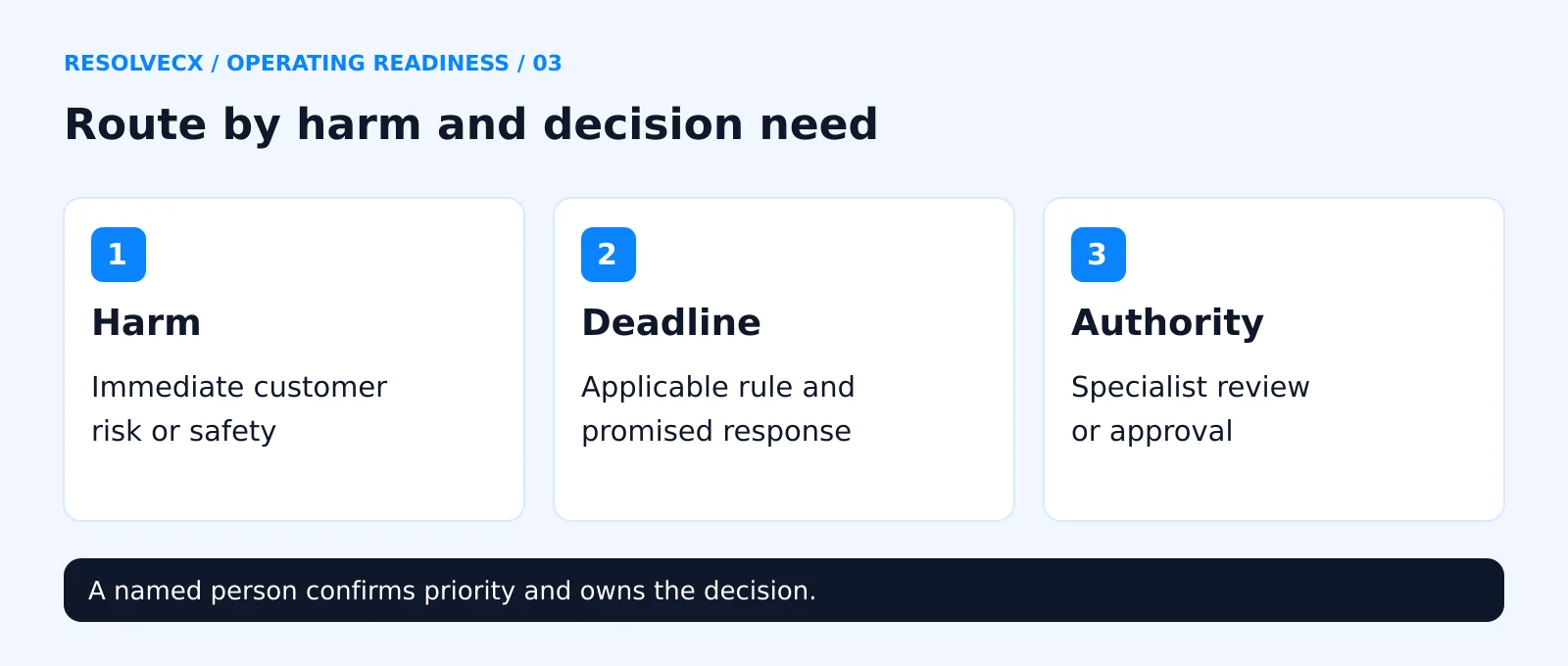
Figure 3. Route by harm and decision need.
Figure 3 text equivalent: Check harm, including immediate customer risk or safety. Check the deadline, including the applicable rule and promised response. Check authority, including specialist review or approval. A named person confirms priority and owns the decision. These checks do not let AI determine vulnerability or remedy fairness.
Triage identifies which complaints need immediate attention, specialist review or a standard route. Prioritize by likely customer harm, vulnerability, imminent deadline, breadth of affected customers and complexity. A loud message is not necessarily a severe case; a quiet complaint from someone facing urgent harm may be more important.
Priority consideration
Evidence to check
Routing decision
Immediate harm or safety
Customer circumstances and time sensitivity
Named specialist or urgent team review
Regulatory or promised deadline
Receipt date, applicable rule and existing commitment
Owner and escalation before the deadline
Shared operational cause
Incident, product and linked cases
Coordinate a common investigation; keep individual outcomes
Routine, clear remedy
Evidence and delegated authority
Appropriate frontline resolution with reviewable record
Distinguish triage from escalation. Triage chooses the initial route; escalation changes ownership or decision authority when an issue exceeds a level's remit or the deadline is threatened. Complaints tied to one incident can share evidence, but each customer's individual circumstances and response still need attention. A backlog plan should identify aged cases, missing evidence and stalled approvals, not merely push teams to close the oldest number first.
When AI proposes categories or urgency, configure a human review point for low confidence, conflicting evidence, and potential vulnerability. Audit a sample of accepted and corrected suggestions. AI must not determine vulnerability or whether a contested remedy is fair. See ResolveCX AI complaint classification as a discussion of assisted classification, not evidence that every proposed automation or forecast is deployed. People retain the outcome decision.
How do you protect response times and resolution quality?
Protect both the deadline and the standard of the decision. Track receipt date, acknowledgment, next update, investigation milestones, approval and response due date separately. Send a useful update when an investigation takes longer: what has happened, what is outstanding, who owns it and when the customer will hear back. An automatic acknowledgment alone is not meaningful progress.
For complaints within the relevant UK FCA DISP scope, the ordinary eight-week requirement in DISP 1.6.2R concerns a final response or a specified written response where a final response is not yet possible. That other response must explain the delay and expected timing and include the required Financial Ombudsman Service information. Under DISP 1.6.2AR, EMD and PSD complaints generally require a final response by the end of 15 business days after the day of receipt. Only in exceptional circumstances beyond the respondent's control may it instead send a holding response within that period, explaining the delay and specifying the final-response deadline, with a final response by the end of 35 business days after the day of receipt. Mixed complaints have specific treatment. Check applicability, exclusions, and any special rules or temporary exceptions for the complaint rather than applying one generic SLA. These are UK financial-services provisions, not universal support deadlines. 2
Do not let speed stand in for fairness. Sample decisions for accurate evidence, reasoned redress, appropriate approvals, and a clear explanation. The Legal Ombudsman's Q3 2025/26 release reported poor complaint handling in 43% of complaints with an investigative outcome. This describes its investigated outcome cohort, not all complaints received, all legal consumers, or all firms. Quality assurance should assess the customer outcome as well as whether a response was sent on time. 5
What should customer communications and management reporting include?
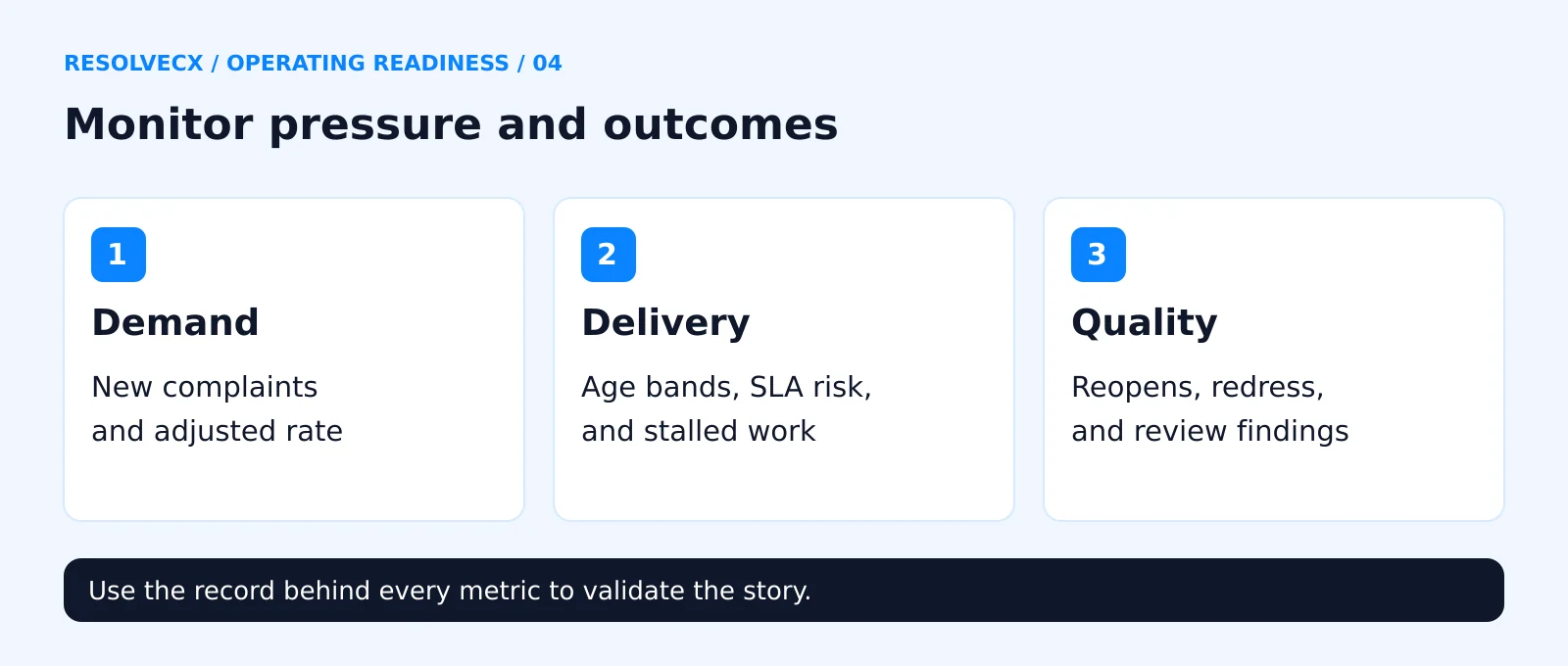
Figure 4. Monitor pressure and outcomes.
Figure 4 text equivalent: Demand includes new complaints and the exposure-adjusted rate. Delivery includes age bands, service-level agreement risk, and stalled work. Quality includes reopens, redress, and review findings. Use the source record behind every metric to validate the story.
During a sustained rise, customers need reliable ownership and specific updates. A handler should confirm the complaint understood, any immediate protection needed, the next step and the anticipated contact point. Where an issue affects many customers, a common service update can explain the incident, but individual complaints still need their own record and any required decision.
A weekly management information view should show received, resolved and carried-over complaints; rate per relevant exposure; age bands; approaching and missed deadlines; severity and vulnerability signals; escalation and reopens; upheld outcomes; and themes with a named action owner. Explain whether each change is a volume, quality or classification effect. Present sample size and uncertainty for small groups.
As checked on November 22, 2026, the FCA describes COM001 as an upcoming unified complaints return from January 1, 2027, not a return already in force on the verification date. Affected firms should collect the individual data points from that date; the first reporting period is January 1 to June 30, 2027. Sections depend on regulated activities and permissions, and reporting moves to individual legal entities rather than groups. Credit-union reporting has a separate CREDS basis. The two vulnerability-related data points cover customers identified as being in vulnerable circumstances, regardless of how disclosed, and complaints relating to or caused by failure to consider or respond to vulnerability. The FCA has removed earlier Data Reference Guides because the technical schema and validation rules remain subject to change. Do not develop against withdrawn guides or treat the explanatory data-capture flow diagram as a final technical specification. Their removal does not change the policy or future DISP requirements. Check the current Handbook and reporting guidance, with appropriate data capture and access controls. 3
How can a rise lead to fewer repeat complaints?
The learning step is to identify a verified cause, fix it and check whether the fix worked. Group similar cases, inspect evidence and test alternative explanations. Assign an operational owner to the corrective action, record the decision and follow a measure after implementation. A complaint category is a description of what went wrong for the customer, not proof of why it happened.
The FCA's targeted review of 40 firms describes complaint trend monitoring, escalation, management oversight, and checking whether interventions improved outcomes. It is not a representative failure rate for the entire market. DISP 1.3.3R requires respondents within scope to put appropriate management controls in place and take reasonable steps to identify and remedy recurring or systemic problems. This includes analyzing individual complaint causes, considering other affected processes or products, and correcting root causes where reasonable. The precise remedy depends on the firm and failure. Connect findings to an owned product, process, or communication change and verify customer outcomes afterward. Qualified advisers should assess applicable duties. 4
A billing example shows the distinction. A team might first see more refund complaints. Investigation may connect them to a faulty tariff rule. Remediation could correct affected accounts, inform customers and monitor recurrence. Closing the incoming queue without fixing the rule would leave the cause in place. Preserve the source complaint, decision and remediation evidence so a later reviewer can reconstruct what changed. Recheck the fix.
Conclusion
Rising complaint numbers call for a measured operating response: establish what changed, forecast the work, protect capacity, prioritize harm, keep customers informed and verify prevention. Start with one trustworthy weekly view and clear owners for the next decision. To discuss a governed complaint workflow for your team, book a ResolveCX demo.
Frequently Asked Questions
A rise is a sustained increase across comparable periods, ideally supported by an exposure-adjusted complaint rate. First check whether channel coverage, customer numbers or counting rules changed. One unusual day is a signal to investigate, not proof of a persistent trend.
Combine a documented historical baseline with seasonality, known business events and current operational signals. Use a range and refresh it against actual intake and resolution. Forecast workload complexity alongside complaint counts because equal numbers of cases can require very different effort.
Agree counting rules, early-warning indicators, staffing options, triage criteria and review ownership before pressure peaks. Test handoffs and deadline alerts using realistic cases. Reassess the plan weekly when arrivals or case complexity diverge from expectations.
No. Age matters, especially near a deadline, but foreseeable harm and customer circumstances can require earlier intervention. Use a documented priority policy and keep ownership of older cases visible rather than burying them behind new urgent work.
Automation can help route records, summarize context and alert owners. It cannot establish whether a contested remedy is fair without appropriate governance and review. Test the outputs, retain the source evidence and keep people responsible for material decisions.
Segment the backlog by deadline, customer harm, missing evidence and stalled approval. Assign a recovery owner, provide realistic customer updates and add temporary capacity where possible. Record why cases remain open; indiscriminate closure can obscure unresolved harm.
Look at complaints per relevant customer or transaction, case age, deadline risk, resolution quality, reopens and repeat contacts. Compare categories and customer groups only when the denominator and counting rules are consistent. Use source-case review to validate apparent trends.
Not necessarily. A larger customer base or improved complaint identification can raise the count while service quality improves. Investigate the causes, rate, severity and outcome before drawing a conclusion. A sustained rise in avoidable harm warrants corrective action even if deadlines are being met.
Sources and References
1. FCA, Complaints data: 2026 H1. January to June 2026 aggregate complaints, compared with H2 2025. Published October 22, 2026. Excludes firms authorized only for consumer credit activities; firm resubmissions can revise historical figures. All sources technically inspected on November 22, 2026.
2. FCA Handbook, DISP 1.6 complaints time limit rules. DISP 1.6 time-limit provisions, including 1.6.2R and 1.6.2AR. Viewed as of November 22, 2026; page last updated June 1, 2026, with a separate future version. Applicability and exceptions require case-specific assessment. All sources technically inspected on November 22, 2026.
3. FCA, Reporting complaints and COM001. Reporting complaints and upcoming COM001 guidance, updated November 13, 2026. January 1, 2027 start; earlier Data Reference Guides removed. Recheck the current requirements and replacement technical guides before implementation. All sources technically inspected on November 22, 2026.
4. FCA, Complaints and root cause analysis review. Targeted 40-firm review, with smaller-firm examples updated July 10, 2026. Includes the DISP 1.3.3R root-cause duty; not a representative market survey or a product certification. All sources technically inspected on November 22, 2026.
5. Legal Ombudsman, 2025/26 quarter three data release. Release dated February 6, 2026, covering October to December 2025. New ombudsman complaints, investigative outcomes, and the historical 2025/26 forecast have different denominators and meanings. All sources technically inspected on November 22, 2026.
Source inspection supports this editorial summary, not professional legal or compliance sign-off. Confirm current rules, applicability, and reporting specifications with qualified advisers before using them operationally.
About ResolveCX Team
The ResolveCX team writes about accountable complaint and case operations. Examples in this guide are illustrative, not legal advice.