
Fact
A dated complaint, incident or process observation with a named source.
Customer and operational problem management
Investigate recurring complaints and incidents, coordinate corrective work and check whether the action was effective. ResolveCX keeps evidence and decisions together while people remain responsible for findings.
Review related customer and operational records.
Compare evidence with competing explanations.
Assign corrective work and any approved workaround.
Check effectiveness and any residual risk.
Problem management software gives teams a governed record and workflow for identifying recurring customer or operational failures, assessing impact, investigating contributing causes, documenting known errors, coordinating corrective actions and checking whether recurrence falls after remediation. It connects related complaints, incidents, evidence, owners and decisions so a reviewer can assess the outcome rather than assume a fix worked.
A problem is the cause or potential cause of one or more incidents or recurring complaints. Investigate when a pattern, significant event, unresolved known cause or authorized referral warrants a separate review. A person should confirm the evidence and check for duplicate work before opening a record.
An incident controls an immediate disruption; a complaint records customer dissatisfaction and response. A case coordinates people, evidence and tasks, while an escalation raises authority or urgency. A problem investigates the underlying cause. An approved change may implement a fix; a corrective action addresses a contributing factor. CAPA is a broader quality discipline.
A task list can track a fix. A governed investigation also needs source records, an accountable owner, a chronology, tested hypotheses, reviewed findings, a temporary workaround and an agreed effectiveness check. Confirm the exact fields and approval controls for your deployment.
Explore the distinct complaint workflow, immediate incident response, customer case record and governed escalation path.
One governed path
These stages describe a workflow to evaluate, not automatic gates in every configuration. Bring your approval policy to a demo.
A person checks related complaints or incidents and decides whether the pattern warrants investigation.
The problem owner records the affected process, impact and linked source records.
An investigator tests competing explanations and separates evidence from a proposed finding.
A reviewer agrees who may use a temporary workaround while corrective work is pending.
An action owner coordinates the approved fix and records completion evidence.
A reviewer compares recurrence with an agreed baseline and either accepts closure or reopens the work.
Investigation with context
A useful record distinguishes the observed problem statement, affected population and chronology from hypotheses, tests, reviewed findings, decisions and actions. Link the initiating complaint or incident, related cases and escalations to preserve their own owners and outcomes. A problem owner coordinates the investigation; a case owner still owns the customer case.
Use problem management software to inspect a source timeline and capture why a proposed cause was accepted or rejected. An evidence timeline asks what happened and when. Five Whys asks where a causal chain breaks; a cause-and-effect diagram groups possible contributors. An investigator should attach the underlying records, test alternatives and ask a reviewer to challenge the finding. These are investigation approaches to evaluate with your team, not claims of built-in diagram templates or automated proof.
Read the problem management definition guideA dated complaint, incident or process observation with a named source.
A possible explanation, with a test and evidence that could disprove it.
A reviewed conclusion stating what the evidence does and does not establish.
An approved choice, named owner, due date, dependency and completion record.
A known error records an understood cause or contributing condition even while a lasting fix is pending. A workaround temporarily reduces impact; it is not the corrective action. Evaluate whether problem management software can show the symptoms, affected audience, approved steps, risks, knowledge owner, reviewer, review date, expiry and retirement decision in your configured workflow. No workaround should be published to every user by default.
The service owner agrees a temporary response for the immediate impact. Retain the reason, limits and customer communication.
The action owner accepts a cause-directed task with dependencies, due date, approval and completion evidence. Confirm any change or release relationship during discovery.
A reviewer compares the affected population with a defined baseline over an agreed observation window. Record intended and unintended effects, residual risk and the rule for reopening.
Effectiveness is a test, not a promise of zero recurrence. Agree the recurrence definition, baseline, population, observation window and comparator before work begins. The reviewer checks whether the action improved the intended measure without unacceptable side effects, then accepts closure or asks the owner to reopen the investigation. Assignment acceptance, absence cover, reassignment and separate closure approval should be tested against your organization's authority model.
Platform intelligence
Check the source and review path for each suggestion. Only an authorized investigator can determine whether a pattern supports a finding. Explore ResolveCX AI capabilities.
Keep a workaround useful while a lasting action is pending.
Evaluate how known errors are recorded in the Knowledge Base. Confirm publication rights, affected audience, review dates and retirement rules for your implementation.
Map responsibility to your approved process.
Discuss investigation ownership, evidence requirements and sign-off with quality and operations leads. Confirm the configuration and separation of duties before rollout.
Suggestions are starting points, not findings.
AI problem management software can help summarize authorized source records and suggest related patterns. Ask to see inputs, rule or confidence context, reviewer override and logged decisions. A person must validate the evidence and determine the cause.
Keep consequential decisions attributable.
Check that an investigator can reject a false match, correct a summary and record why. Correlation is not causation, and model confidence is not measured accuracy.
Explore connected workflow controls with human review, named ownership and documented decisions.
Configured workflow controls help teams review context, assign ownership and record evidence without autonomous decisions.
Bring a permitted example of a recurring issue. Confirm which relationships, controls and reports are available in your scope.
Follow the source complaints or incidents through evidence, findings and a proposed action. Ask who approves the conclusion.
Agree a baseline, affected population and observation window before checking whether recurrence changed.
Confirm the source of truth, integration direction, permissions, migration and rollout with the team. Request current security documentation and a scoped plan.
Commercial terms depend on the agreed scope. Review pricing factors or book a demo.
It links recurring customer and operational failures to an accountable investigation, evidence, action and effectiveness check. ResolveCX is intended for regulated service teams, not as a complete ITIL or ITSM platform.
An incident controls the immediate event; a complaint manages customer dissatisfaction; a case coordinates complex work; an escalation changes authority or urgency. A problem investigates a potential underlying cause. A change or corrective action may address it; CAPA is a broader quality discipline.
Review repeated complaints, related incidents, a significant event, an unresolved cause or a trend crossing your agreed threshold. An authorized owner should assess evidence, duplication and scope before creation. Exact permissions and rules need configuration review.
A known error is an understood problem that may await a lasting fix. Its temporary workaround should identify the owner, approval, permitted audience, risks, review date, expiry and retirement rule. Confirm publication controls in your configuration.
Investigators can organize chronology and evidence around approaches such as Five Whys or cause-and-effect review. Confirm any dedicated template in a demo. AI may suggest related records or summaries, but confidence does not prove causation; a person checks source evidence and overrides errors.
Distinguish immediate containment from cause-directed corrective work. Agree an owner, dependencies, approval and completion evidence. Compare recurrence with a baseline over a defined population and observation window; the reviewer can request further work.
Define a failure threshold and accountable reviewer before closure. If recurrence or an unintended effect breaches the agreed rule, evaluate reopening rather than assuming the action succeeded. Confirm the configured reopen behavior during discovery.
Discuss complaint and incident sources, CRM, contact center, identity, knowledge and reporting data flows. Request current product evidence for connectors, permissions, encryption, retention, deletion, hosting and residency. The website privacy policy is not a product security attestation.
Timing depends on workflow scope, permissions, migration, integration, testing and training. Price depends on the agreed users, volumes, functions and services. Request a scoped proposal; no fixed time or price is asserted here.
Bring a permitted example to see how problem management software connects initiating complaints or incidents, evidence, hypotheses, an approved workaround, corrective action and an effectiveness test. We will discuss which controls fit your operation.
New to the discipline? Read the problem management definition guide.
Weekly insights on production AI, real case studies, and practical automation strategies


Visit or write to us at:
San Francisco, USA
Keep exploring
Relevant guides and real-world perspectives for the work you are doing now.
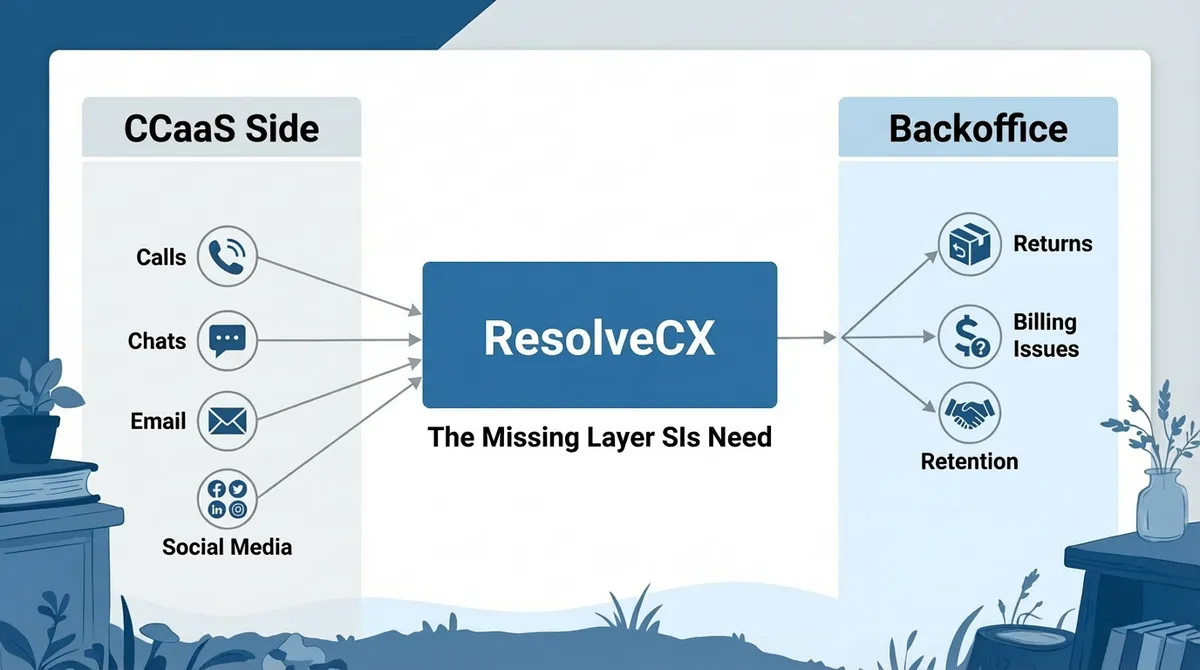 Guide
GuideThe discipline of investigating root causes behind recurring incidents and complaints, not just closing the surface issue. How structured problem management eliminates the failures that generate repeat harm.
Explore resourceGuideISO 9001 Clause 10.2 corrective action requirements, CAPA workflows, 8D investigation support, and audit-ready evidence records, for manufacturing and industrial organizations.
Explore resource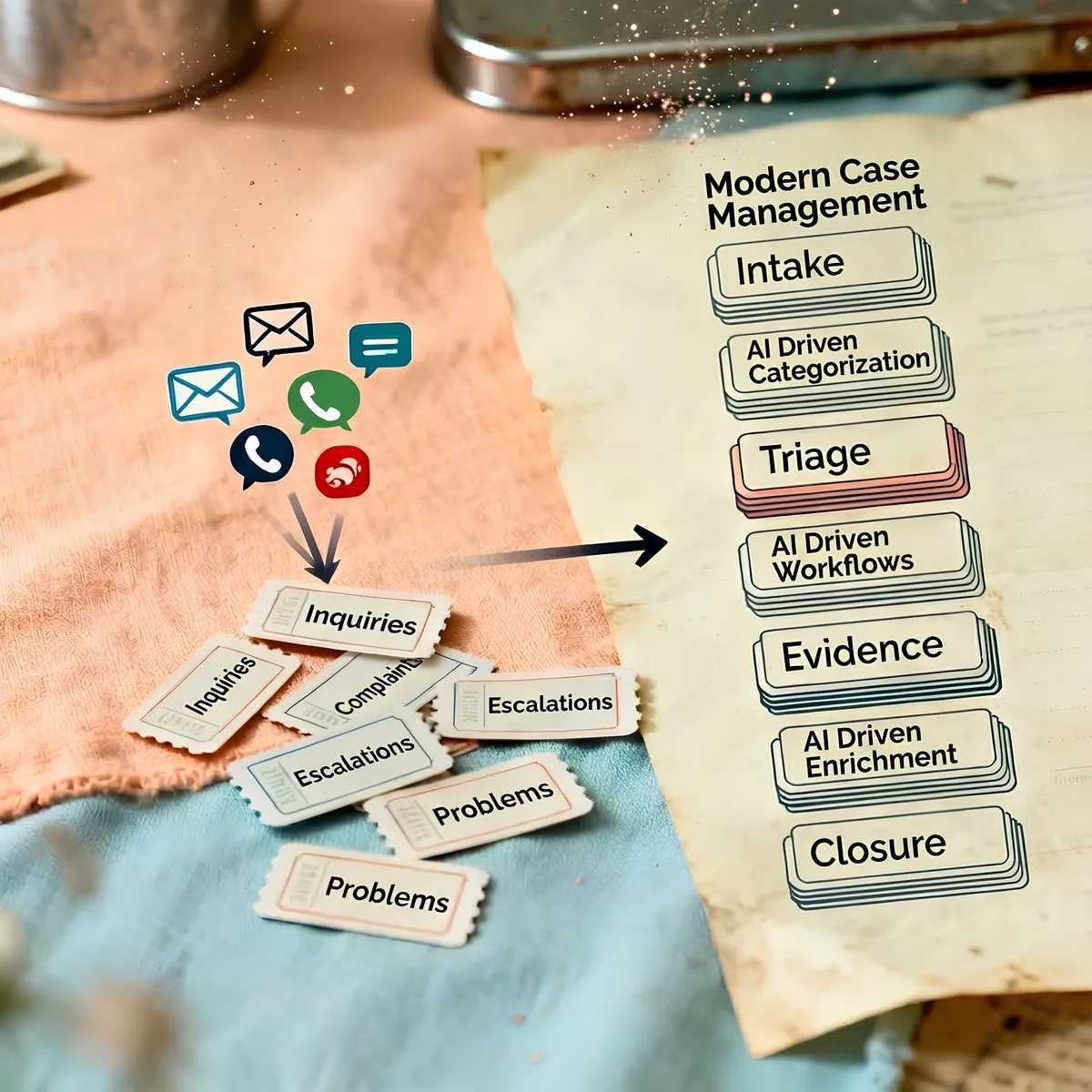 Guide
GuideCQC Duty of Candour, PSIRF-aligned investigation workflows, CQC notification tracking, and multi-site safety governance, for NHS Trusts and registered healthcare providers.
Explore resourceGuideHIPAA Security Rule incident response procedures, 60-day breach notification deadline tracking, OCR audit readiness, and 6-year record retention, for US covered entities and business associates.
Explore resource Blog
BlogPractical thinking on complaint governance, escalation management, and case resolution for regulated industries.
Explore article Video
VideoSee complaint governance, case management, and escalation workflows explained by the ResolveCX team.
Explore videoCase studySee how regulated healthcare teams improved SLA adherence, reduced escalations, and accelerated audit preparation.
Explore resourceFollow the latest ResolveCX updates, governance conversations, and practical customer operations insights.
Explore resource