ResolveCX

    Ofcom GC C4 | Complaint resolution governance

    Ofcom Complaint Escalation Software

    Keep complaint ownership clear, case history connected and urgent work moving. ResolveCX brings resolution governance alongside the service systems your communications teams already use.

    For relevant complaints raised on or after 8 April 2026, unresolved cases reach the six-week ADR access point from first receipt. This is access to ADR, not a guaranteed resolution deadline. Read Ofcom's ADR review.

    Resolution governance in practice

    One complaint. A clear path forward.

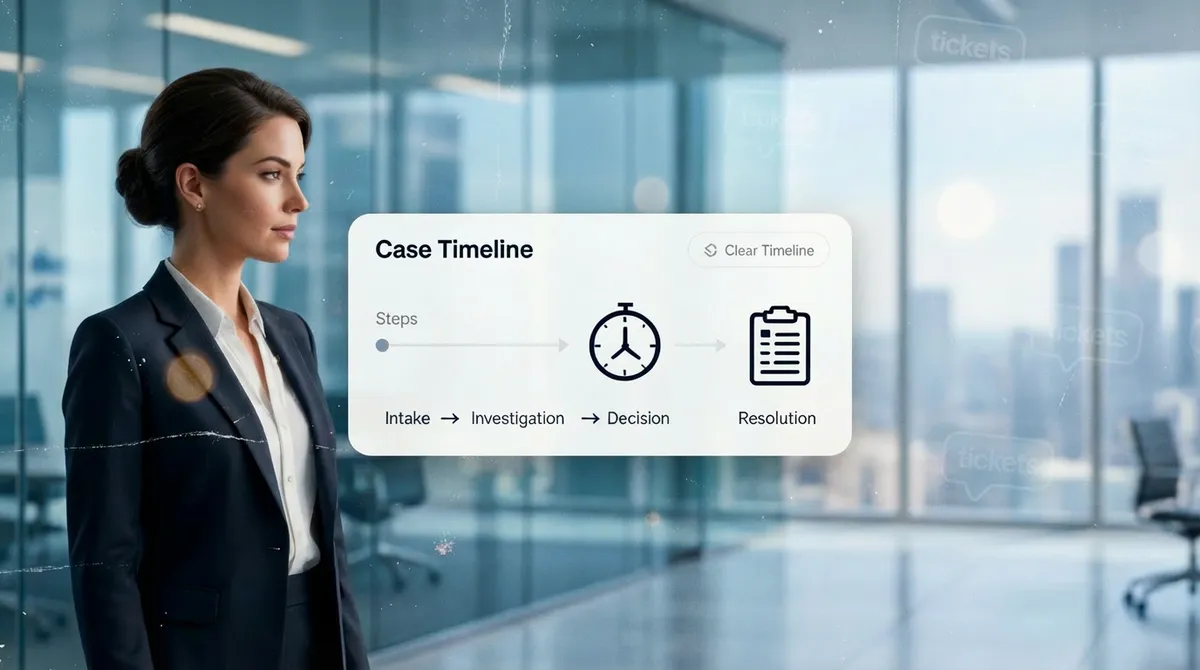
    A connected view of complaint work, related case history and the people responsible for moving it forward.

    1. Assign ownership

      Route the complaint to the responsible team.

    2. Work with the case history

      Keep the customer's issue and related context together.

    3. Escalate with context

      Bring urgent work to the people responsible for the response.

    Built to work alongside existing service systems

    Clear ownership

    Know which team takes the complaint forward.

    Connected history

    Keep the customer issue and case context together.

    Category-based routing

    Direct routine work to the appropriate team.

    Accountable escalation

    Put urgent decisions with responsible people.

    The operating challenge

    Keep the customer issue intact as the work moves.

    Complaint handling crosses customer care, specialist teams and operational leaders. The risk is not simply a missed step. It is a customer having to repeat the story while ownership, evidence and the next decision become harder to see.

    01

    A complaint changes hands without a clear next owner

    When customer care, specialist teams and operations work from separate records, the customer can be left explaining the issue again. Make the receiving owner and next action clear at each handoff.


    02

    The decision is separated from its history

    A response is harder to explain when the complaint, conversations and related case context are scattered. Keep the history connected to the work and the people accountable for its outcome.

    03

    Exceptions get the same path as routine work

    A complaint that needs specialist attention should reach the right people quickly. Define category-based routing for routine work and immediate escalation for exceptions, with people deciding what happens next.

    04

    Operational records and legal duties are mistaken for one another

    Software supports the team's handling process; providers remain accountable for accessible channels, ADR decisions, required records and oversight. Keep those roles explicit in operating procedures.

    ResolveCX for communications teams

    Resolution governance, alongside the systems you already use.

    Bring complaint and case handling into a connected operational view. Keep routine work moving through configured category-based routing, and put exceptions in front of people who can own the next decision.

    See how complaint management supports accountable follow-through, and how case management keeps related history connected across teams.

    01

    Give complaint work a clear owner

    ResolveCX gives teams a place to coordinate complaint ownership and connected case history alongside their existing service systems.

    02

    Route work around complaint categories

    Configured category-based routing helps direct cases to the appropriate team. People remain accountable for exceptions and decisions.

    03

    Escalate urgent work immediately

    When a case needs attention, immediate escalation puts the issue in front of the people who can take it forward. They own the response and outcome.

    The regulatory framework

    What Ofcom requires from communications providers.

    GC C4 sets the complaint procedures, ADR access and record-keeping duties. These sourced essentials are useful context for evaluating a workflow; providers remain accountable for applying the rules to their services and customers.

    01

    Who the rules cover

    GC C4 scope depends on the communications service and customer definition. Relevant groups include consumers, microenterprise or small enterprise customers and qualifying not-for-profit customers.

    GC C4.1 and definitions
    02

    Six-week access, with earlier access where required

    For relevant complaints raised on or after 8 April 2026, an unresolved complaint reaches the six-week ADR access point from first receipt. An ADR Letter is also due earlier when all paragraph 11 conditions are met.

    Ofcom ADR review; C4 annex 11 to 12
    03

    Accessible procedures and clear information

    Providers must offer the required telephone, postal and email or web-form channels, support accessibility and representatives, explain process and timeframes promptly, actively handle complaints and communicate outcomes.

    C4 annex 2 to 10
    04

    ADR Letters customers can use

    Letters explain free access to the provider's independent scheme in plain English and a durable medium. The current approved schemes are Communications Ombudsman and CISAS.

    Ofcom ADR schemes; C4 annex 11 to 13
    05

    Complaint evidence and monthly records

    Keep the specified complaint, communication, resolution and closure records. Monthly totals separate receipts, ADR Letter routes, resolution routes and specified closure reasons.

    C4 annex 20 to 25
    06

    Retention and provider oversight

    Keep specified records for at least twelve months after resolution or closure in a clear, readily accessible format. Providers monitor their own C4 compliance. Relevant consumer bills, except SMS bills, also have specified scheme and complaint-code information duties.

    GC C4.4; C4 annex 24 to 26

    Source version: Ofcom General Conditions effective 8 April 2026. Consolidated GC C4 text.

    A focused product conversation

    Bring the exceptions your team needs to get right.

    A useful ResolveCX conversation starts with the work, the handoffs and the decisions your people own.

    Discuss your workflow
    1. 01

      Where does complaint ownership change?

      Map the teams involved, the connected case history and the point a person takes responsibility for the next action.

    2. 02

      Which categories follow a routine route, and which need escalation?

      Use real examples to discuss configured routing, immediate escalation and who owns exceptions and outcomes.

    3. 03

      What must your operating model and legal process cover?

      Discuss the provider's scope, ADR scheme, channels, records and the specific product questions that need confirmation.

    Related workflows

    Explore complaint workflows for telecoms teams.

    Ofcom complaint handling

    Questions communications teams ask.

    Ofcom complaint workflow

    Put accountable ownership at the centre of complaint resolution.

    Bring your complaint categories, handoffs and exception paths. Explore how ResolveCX supports connected case handling alongside your existing service systems.

    Start Resolving. Not Tracking.

    Start Resolving. Not Tracking.

    See how ResolveCX helps teams manage cases, escalations, incidents, and customer issues with greater speed, accountability, and control.