
AI Case Summarization Software for Customer Service Handoffs
Orient the next handler without treating a draft as the record. ResolveCX AI Case Summarization may prepare a reviewable briefing from authorized context for configured handoffs and escalations. Evaluate it with your team; people verify facts and decide next steps.
- SOURCEAvailable, authorized case history
- AI MAY SUGGESTDraft summary for a handoff
- PERSON REVIEWSHandler checks and amends against the record
- PERSON DECIDESPerson confirms the facts and next step
A draft does not replace review of the case record. Illustrative only; availability depends on configuration.
Context
AI may suggest a summary from authorized case information
Review
A person checks the source and summary
Control
People decide what action to take
Scope
Available context depends on configuration
What it does
What Is AI Case Summarization Software?
ResolveCX AI Case Summarization is a customer-service capability within ResolveCX Intelligence that may prepare a reviewable draft from authorized case context for a configured handoff or escalation. Receiving handlers use the briefing for orientation, not as a verified account. The source record remains authoritative; people check facts, correct inaccurate information and decide next steps.
It supports review within Case Management, Complaint Management and Escalation Management, not a separate product or free support ticket summarizer. Ask which information is available and where a draft appears. A fluent summary can omit or misstate details; do not assume complete history, built-in editing controls or an approved outcome.
How it works
Agree the summary request
Confirm when the configured workflow can request a draft for a case handoff or escalation. Ask which triggers are available rather than assuming automatic creation.
AI may use authorized case context
AI may use the case information made available to the configured workflow. It does not imply access to every message, channel, system, or historical record.
AI may prepare a reviewable draft
Evaluate whether the briefing captures the issue, chronology, actions and open questions. These are review criteria, not confirmed output fields. Details may be missing or wrong.
A person reviews the source
Check dates and separate reported concerns from verified findings, and proposed actions from approved or completed work. Qualified people handle complex, ambiguous, vulnerable, specialist and regulatory matters.
Agree the owner and next action
People correct inaccurate information and decide the next step. Confirm summary placement, available controls and recordkeeping with the team; retention and audit behavior are not assumed.
Industry use cases
AI Case Summarization Across Industries
Telecommunications
A complaint handler may use a draft to orient a receiving case worker at handoff. Both check the source record, outstanding commitments and any requirements needing specialist review.
Financial Services
An escalation manager or QA/compliance reviewer may assess a briefing alongside the case record. Qualified people verify timelines and decide how to handle sensitive or regulatory matters.
SaaS & Technology
A case worker may review a draft during an engineering-to-support transfer. Technical status, completed work and proposed remedies need source checks before a supervisor agrees the next action.
BPO & Contact Centres
A contact-centre agent or supervisor may evaluate a briefing for an escalation. The receiving handler verifies the source and follows the client's agreed process, without assuming shared access across teams.
Why it matters
AI Draft and Human Responsibility
These are evaluation stages, not promised output fields or performance guarantees. AI may draft only from available authorized context. People check the source of truth and own the next action.
| Summary stage | AI may draft | Human must verify |
|---|---|---|
| Issue | An issue overview | Check the concern against the source record |
| Chronology | A sequence of events | Verify dates and missing context |
| Actions | Recorded action context | Separate proposed, approved and completed work |
| Findings | A briefing for review | Distinguish reported concerns from verified facts |
| Open questions | Possible outstanding points | Check omissions and seek authoritative answers |
| Ownership | Available handoff context | Confirm the owner and specialist responsibility |
| Next step | Context for a decision | Decide the next action using the source record |
Practical evaluation guide
How to evaluate AI case summarization software
Evaluate AI case summarization for customer service using a representative handoff and an incomplete case. Check the issue, chronology, actions, open questions, owner and next step as review criteria, not promised output fields. Agree how people will inspect the source and correct inaccurate information.
Illustrative review scenario
A proposed action is not a completed action
A long case record may contain a promised callback, a proposed remedy and a later update. A summary must not present the promise as evidence that the callback happened, or the proposed remedy as an approved outcome. Compare material statements with the source record and correct missing qualifications. The receiving handler still needs to understand what is known and what requires follow-up.
Questions to agree before use
- Which authorized sources and fields are available, and what context is missing?
- When is a draft requested, where does it appear and how are updates handled?
- Which edit, regenerate, save, copy, dismiss or feedback controls exist, and what access, retention and audit rules apply?
- Can reviewers verify dates, open questions, reported versus verified facts and proposed versus approved versus completed actions against the source?
A checked summary may support a handoff, complaint review or specialist transfer within ResolveCX Intelligence. People agree ownership and next actions; a knowledge owner may help verify applicable guidance. Evaluate intake, classification and knowledge separately. These links describe related capabilities, not shared sources, permissions or combined availability.
ResolveCX AI
Evaluate Your Case Handoff Workflow
Book an AI Case Summarization demo to review a representative handoff, missing context and human source checks. Confirm what is available for your workflow before relying on a draft.
Keep exploring
Recommended insights
Relevant guides and real-world perspectives for the work you are doing now.
 Integration overview
Shopify Integration
Bring Shopify customer and order context into ResolveCX, with supported agent actions and permission-dependent AI assistance.
Explore resource Integration overview
NICE CXone Integration
An overview of the ResolveCX and NICE CXone integration destination.
Explore resource Solution
Customer Churn Prediction for Financial Services
A destination for financial services teams exploring customer churn prediction.
Explore resource Guide
What Is Case Management?
An overview of case management, how a case differs from a ticket, and the role of context, ownership, and records in resolving customer issues.
Explore resource Blog
The ResolveCX Blog
Practical thinking on complaint governance, escalation management, and case resolution for regulated industries.
Explore article Video
How AI Handles Customer Issues End-to-End | ResolveCX by CodeCones
Case classification, sentiment-driven routing, summaries and response suggestions with AI controls.
Explore video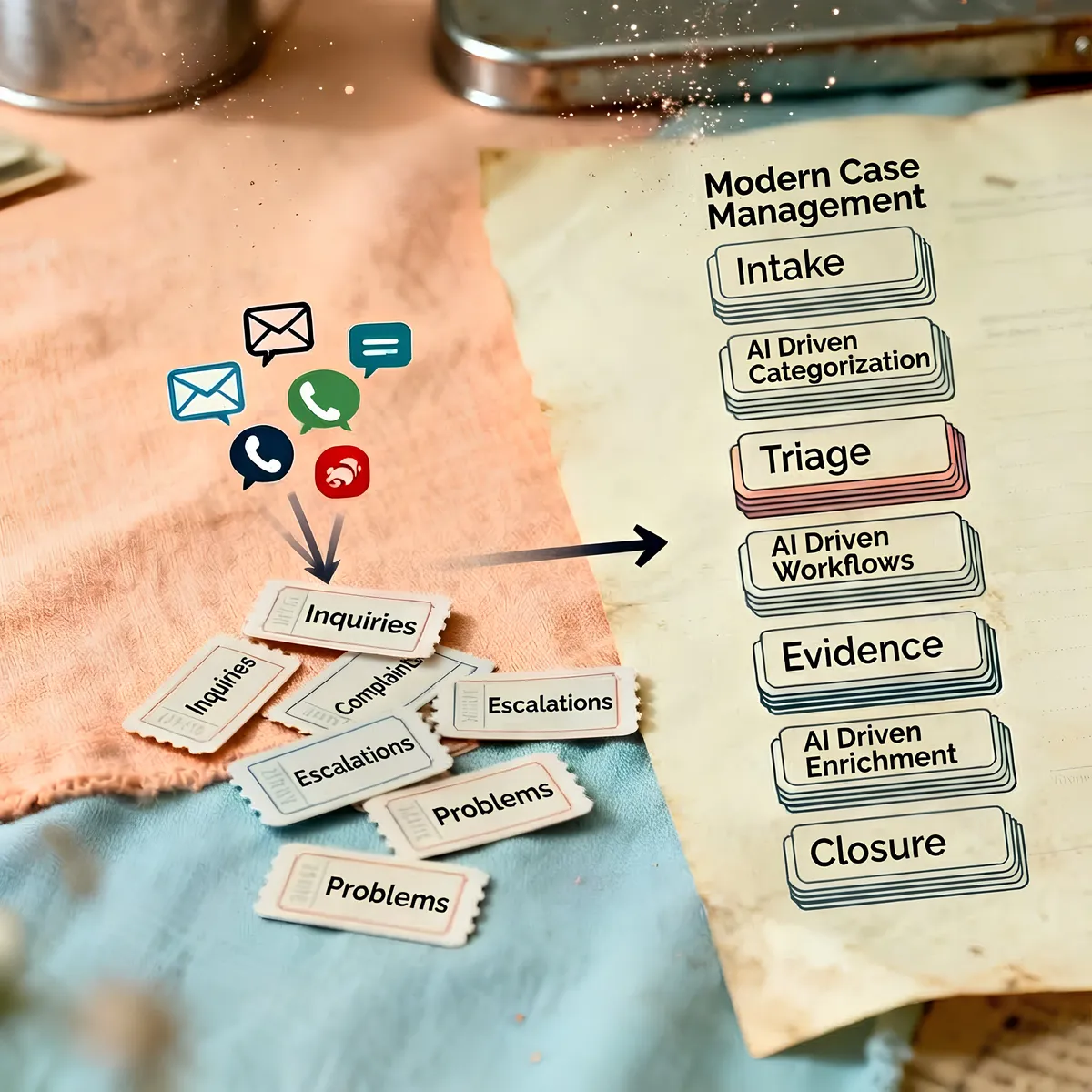 Case study
Healthcare Governance Case Studies
See how regulated healthcare teams improved SLA adherence, reduced escalations, and accelerated audit preparation.
Explore resourceResolveCX on LinkedIn
Follow the latest ResolveCX updates, governance conversations, and practical customer operations insights.
Explore resource