

Case Management: The Definition
Case management is the systematic coordination of complex matters that require multiple interactions, multiple stakeholders, and a structured progression from intake to outcome. Each case is a discrete unit of work with its own record, owner, timeline, and evidence file.
In customer operations, case management covers any interaction that cannot be resolved in a single contact: disputes, vulnerability assessments, escalated service issues, complex enquiries, claims, and onboarding reviews. In healthcare and legal services, a case may span weeks or months with contributions from multiple specialists.
The defining characteristic of good case management is continuity: every person who touches the case can see the full history, every decision is documented, and the customer never has to repeat themselves or chase for updates. Without a formal system, cases fragment across email inboxes, spreadsheets, and individual knowledge, creating compliance risk, poor customer experience, and invisible operational gaps.
Single case record
All interactions, evidence, notes, and decisions are attached to one record. No information exists outside the case, and no step can be completed without being documented.
Named ownership at every stage
Every case has a named owner responsible for progression. Handoffs transfer full context, not just a reference number, eliminating the 'I wasn't told' problem.
Structured progression
Cases move through defined stages: intake, investigation, resolution, and closure, with mandatory checks at each gate. Ad hoc handling is prevented by design.
Why Case Management Matters for Regulated Industries
In regulated industries, a case record is not just an operational convenience; it is often a legal document. Regulators expect to see a full, accurate account of how complex customer matters were handled, who made which decisions, and what outcomes were reached.
Financial Services
FCA rules require firms to handle complex customer matters, including disputes, claims, and vulnerability assessments, with documented processes and outcomes. Case records provide the evidence trail for regulatory review and the Financial Ombudsman Service, and support Consumer Duty obligations around fair outcomes.
Healthcare
Patient case records must document every interaction, clinical decision, and referral. CQC inspections assess whether care is well-led and evidence-based. A structured case management system ensures no care pathway step is undocumented, supporting safe and effective governance.
Insurance & Legal
Claims and legal matters require detailed case records to support liability decisions, fraud detection, and litigation. Every interaction with claimants, witnesses, and third parties must be timestamped and attributed. Audit trails are essential for dispute resolution and regulatory compliance.
How the Case Management Process Works
Case management follows a structured lifecycle. Each stage has defined inputs, activities, and outputs, and every action is documented against the case record.
Step 01
Case Intake
A case is opened, triggered by a customer contact, internal referral, or automated system alert, and a structured record is created with mandatory fields: customer, issue type, channel, priority, and assigned owner.
Step 02
Evidence Gathering
The case owner collects relevant information: documents, account history, prior interactions, third-party inputs. All evidence is attached to the case record, not held in email or personal storage.
Step 03
Investigation & Analysis
The case is examined against policy, regulation, or service standards. Specialist teams may be consulted. All findings, opinions, and decisions are recorded with rationale.
Step 04
Resolution Decision
A resolution is determined: outcome, any remedial action, and communication to the customer or stakeholder. The decision is recorded with supporting evidence and the decision-maker named.
Step 05
Communication & Closure
The customer receives a clear outcome communication. The case is formally closed with a resolution summary. Unresolved matters are escalated with full context transferred.
Step 06
Review & Learning
Closed cases are reviewed for pattern trends, systemic issues, and process improvement opportunities. Insights feed into training, policy updates, and root-cause remediation.
ResolveCX
How ResolveCX Supports Case Management
ResolveCX replaces the silos of email, spreadsheets, and disconnected tools with a unified case management layer where every case has a named owner, a full evidence file, and a complete audit trail from intake to closure.
- Case-first interface that surfaces the full customer history, all interactions, and all open matters the moment a case worker opens a record
- AI case summarization that generates a structured summary of any case, covering issue, timeline, actions, and status, in seconds
- Named ownership with handoff alerts ensuring no case is ever unassigned
- Omnichannel inbox that brings email, WhatsApp, web chat, and web forms into a single case timeline
- SLA tracking with automated escalation before breach
- One-click audit export for regulatory requests
ResolveCX vs. Siloed Case Handling
Unified case record with full history
History scattered across email threads
Named owner at every stage
Cases passed informally with lost context
AI-generated case summaries
Agents re-read months of notes on open
Omnichannel case timeline
Separate inboxes for each channel
Automated SLA enforcement
Manual deadline tracking in spreadsheets
One-click audit export
Hours of manual record compilation
Frequently Asked Questions
What is case management?
Case management is the process of managing complex, multi-step customer or operational interactions from initial contact through to resolution. Each 'case' is a structured record that captures all interactions, evidence, decisions, and outcomes related to a single matter, ensuring nothing is lost, no step is skipped, and the full history is available to every team member.
What is the difference between case management and complaint management?
Complaint management is a subset of case management focused specifically on formal expressions of customer dissatisfaction with defined regulatory timeframes. Case management is broader; it encompasses any complex interaction that requires investigation, evidence gathering, and structured resolution, including disputes, service requests, vulnerability assessments, and onboarding reviews.
What industries use case management software?
Case management software is used across financial services (for complaints, disputes, and vulnerability assessments), healthcare (for patient queries and clinical case coordination), legal services, insurance claims, government services, utilities, and any customer operations team handling complex, multi-step interactions that require evidence capture and audit trails.
What are the key features of case management software?
Effective case management software should include: a structured case record with mandatory fields, named ownership and assignment workflows, SLA tracking with automated escalation, evidence and document attachment, full interaction history, integration with communication channels, reporting and analytics, and a complete audit trail exportable for compliance purposes.
How does AI improve case management?
AI improves case management by automatically summarising case history for agents on case open, classifying incoming cases by type and priority, routing cases to the right team based on customer sentiment and value, predicting cases at risk of escalation or churn, and surfacing knowledge base articles relevant to the current case.
Join 1000s of AI Innovators
Weekly insights on production AI, real case studies, and practical automation strategies


Office
Visit or write to us at:
San Francisco, USA
2261 Market Street #85931
San Francisco, CA 94114
Keep exploring
Recommended insights
Relevant guides and real-world perspectives for the work you are doing now.
 Guide
GuideFundamentals
What Is Escalation Management?
How complaints and incidents move through defined escalation tiers, with SLA enforcement, named ownership, and governed handoffs. Why unstructured escalation creates regulatory and commercial risk.
Explore resource Guide
GuideCisco Webex CC
Cisco Webex Contact Center Integration
API-based case creation from Webex Connect IVR events, agent screen pop via the Webex CC Desktop Widget SDK, case management layer behind the Webex CC agent desktop, and bi-directional status sync to Webex Analyzer dashboards where configured.
Explore resource Guide
GuideAvaya AXP
Avaya Experience Platform Integration
AXP open API case creation from Avaya IVR events, Avaya Aura CTI screen pop, structured case management behind the ACE agent desktop following DevConnect API patterns, and supervisor dashboard status sync.
Explore resource Guide
GuideFive9 VCC
Five9 Contact Center Integration
SuperAPI case creation from Five9 IVR script webhooks, Agent Desktop Toolkit screen pop, case management behind Five9 VCC, and bi-directional status sync to Five9 Supervisor Application.
Explore resource Blog
BlogBlog
The ResolveCX Blog
Practical thinking on complaint governance, escalation management, and case resolution for regulated industries.
Explore article Video
VideoVideo
ResolveCX Video Library
See complaint governance, case management, and escalation workflows explained by the ResolveCX team.
Explore video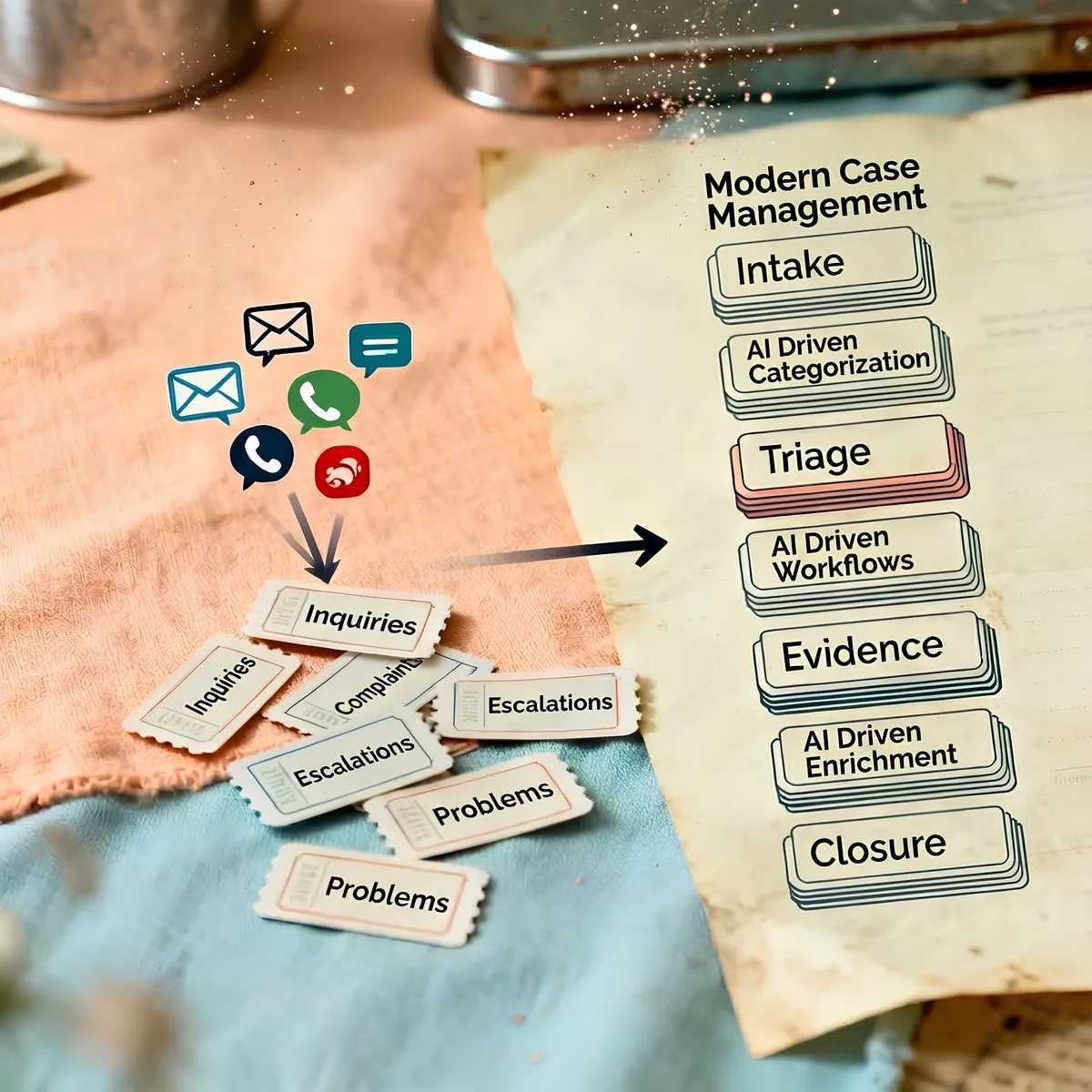 Case study
Healthcare
Healthcare Governance Case Studies
See how regulated healthcare teams improved SLA adherence, reduced escalations, and accelerated audit preparation.
Explore resourceResolveCX
SocialSocial
ResolveCX on LinkedIn
Follow the latest ResolveCX updates, governance conversations, and practical customer operations insights.
Explore resource